All Very Political?
The art year 2026 promises to be full of tension. A text by Sabine B. Vogel.

Ferdinand Georg Waldmüller, Große Praterlandschaft, 1849 Belvedere, Wien, Foto: Johannes Stoll
With a population of over 5 million people in 53 cities, the Ruhr region is Germany’s largest metropolitan area. Lined up along the Ruhr River, which gives the region its name, it has the highest density of museums and outstanding soccer clubs, but also a strikingly high unemployment rate. This is because the coal mines have long been closed, the automotive industry has moved away, and steel production is declining.
What remains are industrial ruins, some of which are used for cultural institutions. From June 21 to October 4, 2026, this polycentric, post-industrial, and long-multicultural area will host the 16th Manifesta, Europe’s traveling biennial. But how can this population be won over to art? To this end, Manifesta is venturing down a new path: vacant post-war churches in four cities will be used as venues. In view of the debate fueled by accusations of blasphemy surrounding the “Du sollst dir ein Bild machen” (You Shall Make Yourself an Image) exhibition at the Künstlerhaus Wien (until February 8, 2026), the choice of location could make this the most exciting and daring event of 2026.
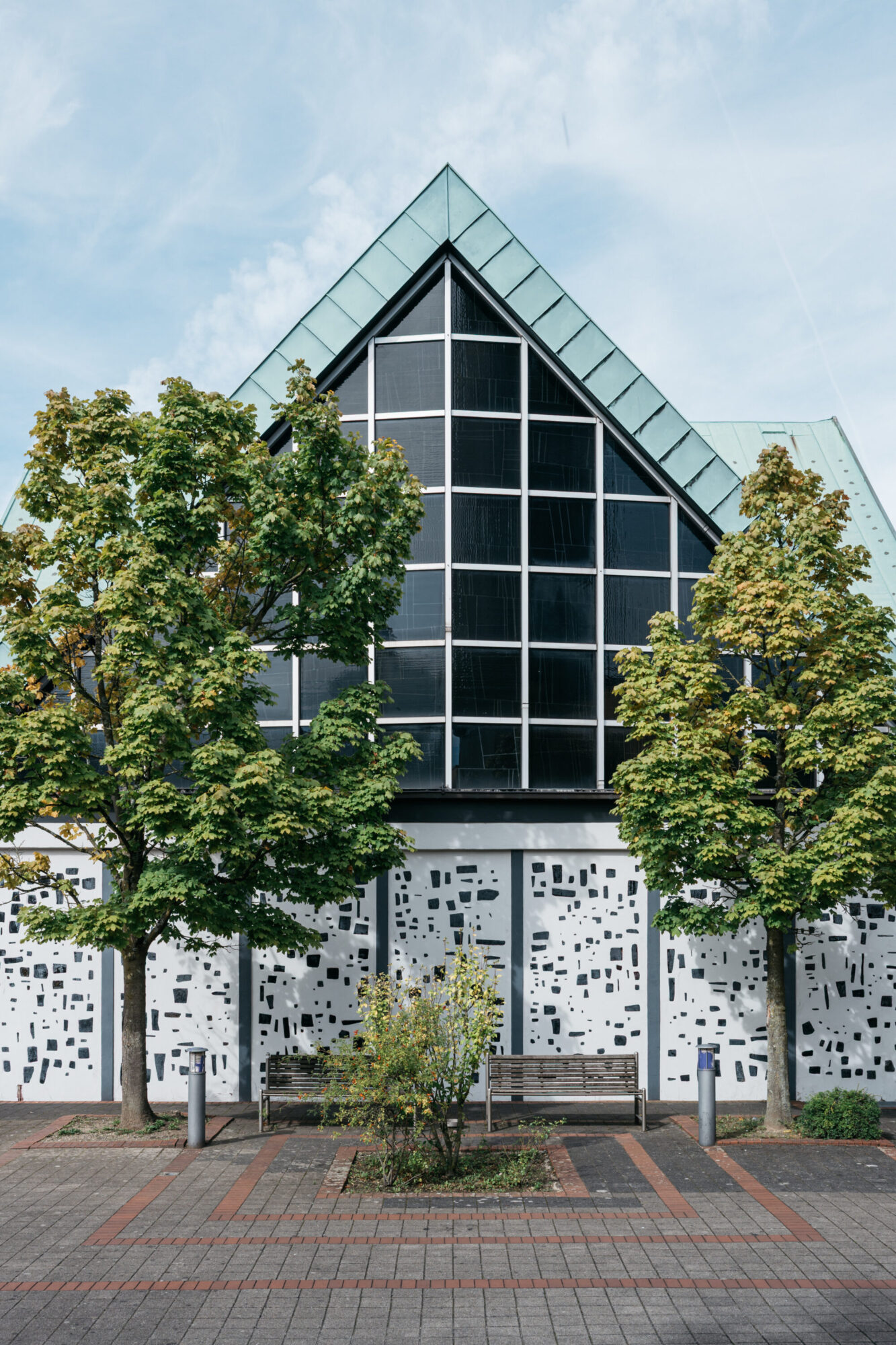
Essen Markuskirche © Daniel Sadrowski
Can the Venice Biennale still keep up?
Certainly not in terms of religious beliefs, but absolutely in political terms. Although the official opening is not until May 9, this 61st edition is already making headlines: the completely unknown Alma Allen will be exhibiting at the US Pavilion this year. With no experience with institutional personnel, this choice guarantees the position demanded by Trump of reflecting and promoting American values—what a step backward! In any case, the artist’s success is double-edged: his galleries immediately removed him from their programs.
The artist chosen for the South Africa Pavilion experienced a similar fate: Gabrielle Goliath, born in South Africa in 1983, had been selected by a jury to show her performances and videos on femicide in South Africa, genocide in Namibia, and deaths in the Gaza war. However, lines of text by Palestinian poet Hiba Abu Nada, who was killed by Israeli soldiers, were also to be included – and the Minister of Culture immediately struck the contribution from the program due to its “polarizing political representation.” He responded to accusations of censorship with a long, indignant statement in which he complained that the contribution had been financed by a “foreign state”—apparently Qatar—which might prefer to position such political statements in its own pavilion. Apparently, this is not a sponsorship, but a purchase option. In any case, her gallery immediately distanced itself from the artist.
Incidentally, a similar censorship incident occurred last year at Vienna’s Belvedere Museum: Rabbya Naseer was asked to revise her solo exhibition because of a few lines of text by a Palestinian author. After many misunderstandings, she processed the entire process in a YouTube video, and the exhibition disappeared without a trace from the program—but that’s another story.
Back to Venice: One of the most exciting pavilions this year will certainly be the Austrian one, curated by choreographer and director Florentina Holzinger, who is famous for her spectacular and radical theater performances. She will collaborate with performers, musicians, and stunt performers in Venice to stage “Seaworld Venice”—a first for Holzinger, as the piece must run continuously for six months. Or will we only see a film?
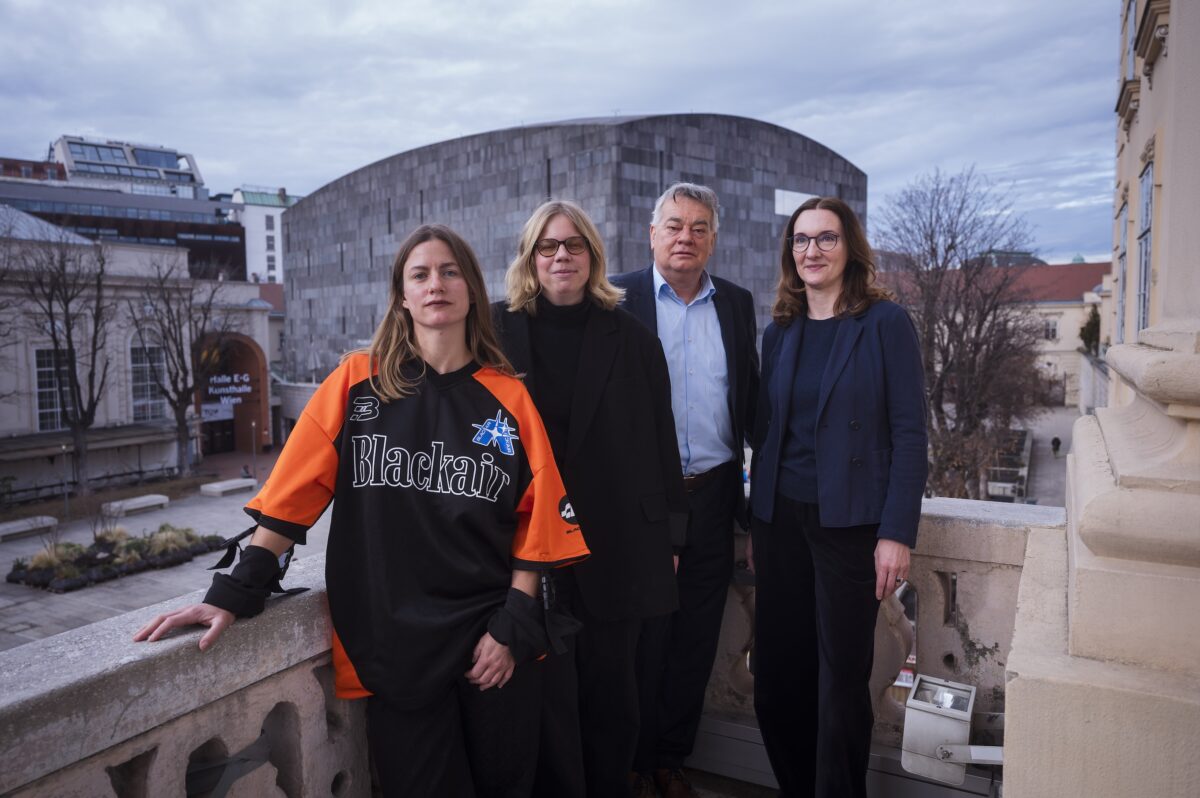
Florentina Holzinger, Nora-Swantje Almes, Werner Kogler, Gabriele Spindler. Courtesy BMKOES, 2025. Foto:Paul Kulec
Although not a biennial, but rather an art fair, Art Basel Qatar, which will take place for the first time in early February, is eagerly anticipated: Who will travel to the small emirate on the Gulf, and who will buy from the 87 galleries? How strongly will the political crises in Yemen, Gaza, and Iran influence the fair? Can the concept of a single-artist presentation be financially viable for the galleries given the high costs?
One thing at least is certain: in the fair’s parallel program, Qatar has a lot to offer with magnificent museums and spectacular desert installations by artists ranging from Richard Serra to Olafur Eliasson—and with nine installations produced especially for the fair, it is opening a new chapter that blurs the line between biennial and art fair.

Doha, Courtesy of Art Basel
Wouldn’t that be a desirable concept for Vienna as well? Instead of 13 trade fairs, some of which are dispensable, a single, high-caliber event that impresses with Biennale-worthy art, perhaps accompanied by first-class antiques? But that’s another story.
Let’s stick with museums: completely unaffected by the global political situation, from the end of February we can escape to an idyllic world free of crises and conflicts amid Ferdinand Georg Waldmüller’s landscape paintings at the Lower Belvedere—because art can do that too.
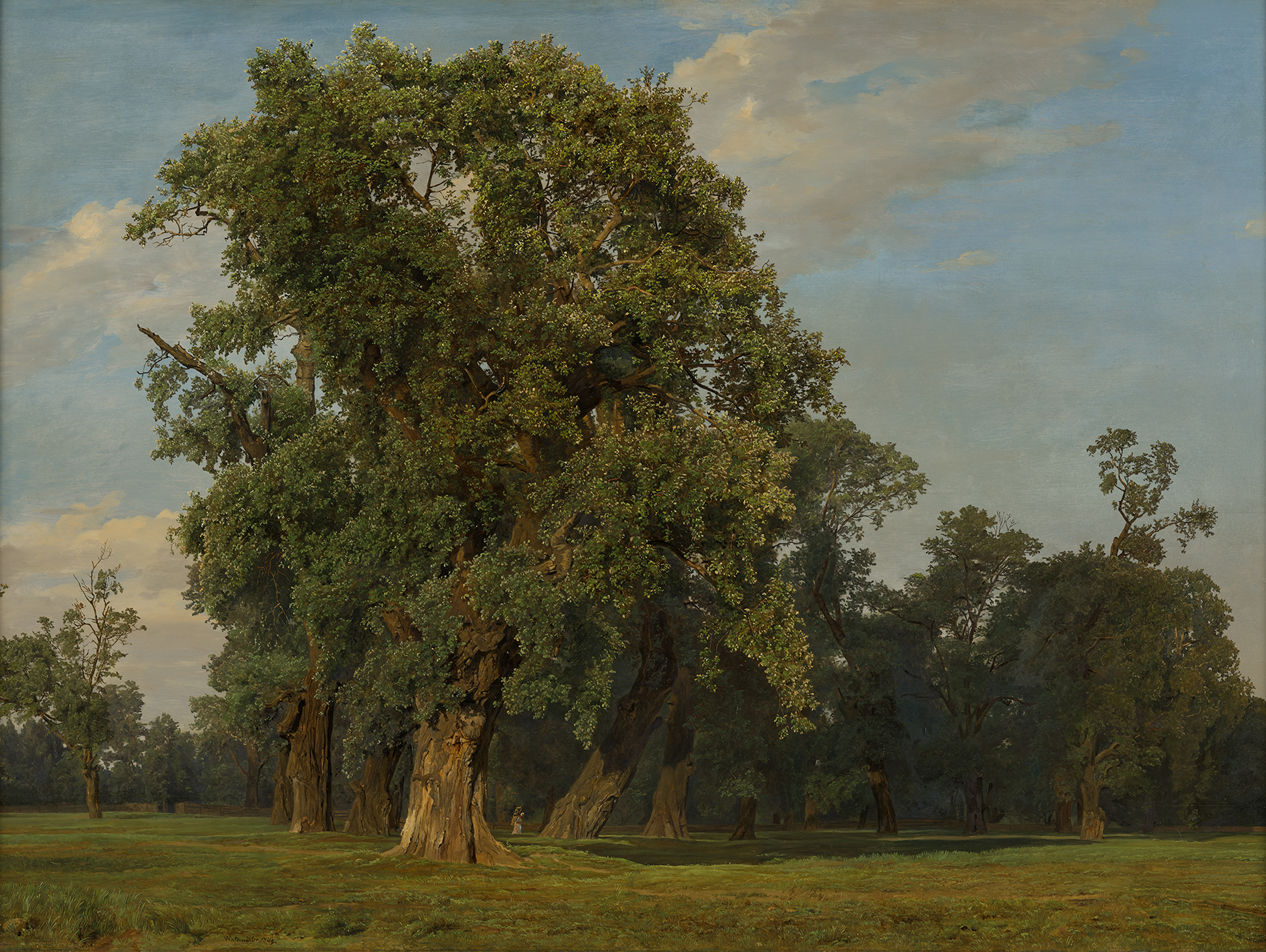
Ferdinand Georg Waldmüller, Große Praterlandschaft, 1849 Belvedere, Wien, Foto: Johannes Stoll