Vienna
Art
Locations
Vienna Art Week Art Spaces
Vienna art city map: Vienna’s art scene at a glance
Compose your own map of Vienna’s superabundant art offerings!
Special Projects
Institutions
Vienna is one of a kind when it comes to art, as exemplified by its dense landscape of museums, exhibition spaces and art universities.
Independent Spaces
Independent art spaces, many of which are run by artists, reflect recent developments in the art scene and show Vienna to be a hub in the international art scene.
Galleries
Vienna’s galleries feature both established and new contemporary art. Seize the opportunity to gain inside knowledge in one-on-one conversations!

Akademie der bildenden Künste Wien
Schillerplatz 3, 1010 Wien
+43 1 588 16-0
As one of the oldest art universities in Europe, the Academy today sees itself as an international field of experimentation in contemporary art and architecture, as well as a place of debate in the area of tension between theory and practice, science and art, teaching and research.
The academy has important historical art collections, a picture gallery, a copperplate engraving cabinet and a glyptothek.

Located in the historical heart of Vienna, the Albertina combines Imperial flair with great art. A magnificent former residence of the Habsburgs and an art museum of international renown, the Albertina stands for one of the most important collections of graphic art, attracting city and cultural tourists from all over the world.
© Harald Eisenberger

Albertina Klosterneuburg
An der Donau-Au 1, 3400 Klosterneuburg
+43 1 534 83 0
With the opening of ALBERTINA KLOSTERNEUBURG, the ALBERTINA Museum is pursuing an important goal: to make a large part of its collection of post-1945 art accessible to the public. Artworks that are neither being shown in exhibitions at the ALBERTINA Museum or ALBERTINA MODERN nor currently on loan elsewhere will be presented to the interested public in Klosterneuburg. The museum’s present-day contemporary art holdings encompass around 65,000 works (paintings, drawings, printed graphics, photography, sculptures, videos, and installations).
ALBERTINA KLOSTERNEUBURG | Foto © Stefan Olah

ALBERTINA MODERN is one of the largest museums for modern and contemporary art. ALBERTINA’s second location opened on May 27, 2020. It has a collection of over 60,000 works by 5,000 artists. On more than 2,000 square meters, ALBERTINA MODERN presents comprehensive exhibitions of modern and contemporary art, based on its own holdings and, above all, major works of the Essl Collection, which has been housed in ALBERTINA since 2017.
Albertina Modern, Foto (Mockup) © Rupert Steiner

Architekturzentrum Wien
Museumsplatz 1 im MuseumsQuartier (Eingang Volkstheater), 1070 Wien
+43 1 522 31 15
The Az W shows, discusses and investigates how architecture and urban development shape our daily life. Its program encompasses international themed exhibitions, a permanent exhibition of Austrian architecture, and a total of over 500 events each year including lectures, city excursions, film screenings, and hands-on formats.

Belvedere 21 – Museum für zeitgenössische Kunst
Arsenalstraße 1, 1030 Wien
+43 1 795 57-0
Belvedere 21 is a venue for contemporary art, film and performance as well as a social meeting place in an urban future area. In Karl Schwanzer’s adapted World’s Fair Pavilion, Austrian and international art from the 1960s to the present is shown on three light-flooded levels.
Lukas Schaller, © Belvedere, Wien

Bildraum 01
Strauchgasse 2, 1010 Wien
+43 (1) 815 26 91-31
In Vienna, once not far from the MuseumsQuartier and once directly in the heart of the Inner City, two exhibition spaces offer the best conditions for contemporary artists to position themselves in the cultural landscape.
While Bildraum 01 in Vienna’s Strauchgasse focuses on contemporary photography and graphic art, Bildraum 07 in Burggasse presents mainly painting, installation and object art.

Blickle Raum Spiegelgasse
Spiegelgasse 2, 5. Stock (DG), 1010 Wien
T +43 662 211 20 77
The Blickle Raum Spiegelgasse is a place for research, a white cube, a projection screen, a temporary studio, a stage, a meeting room, or a place for discourse. Above all, however, it is a space for possibilities and artistic work. It is provided by the Ursula Blickle Foundation and is located in the heart of Vienna.
© Foto Dieter Auracher
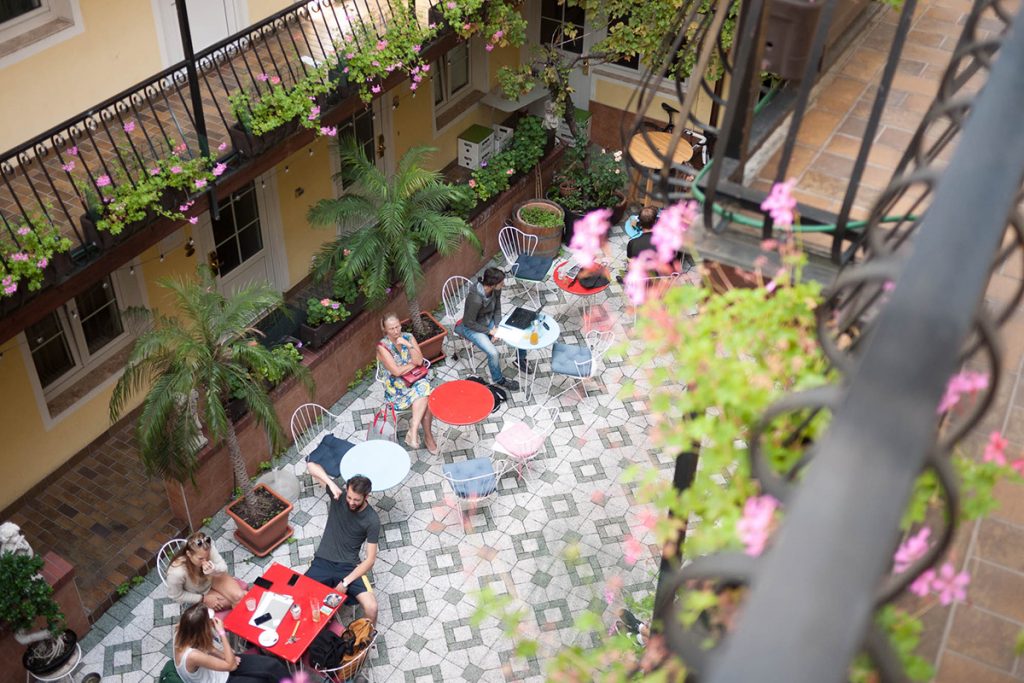
Ein Raum für alles, was am Brillantengrund passieren muss. Ausstellungen. Fotografie, Malerei. Der jährliche BBUC-Showroom. Pop-ups. Brands wie Converse und Oakley hatten hier ihr VIP-Showroom. Die Red Bull Music Academy ihre Lectures – Four Tet, Cinematic Orchestra, und andere, die wissen, was sie tun.
© www.brillantengrund.com

For many decades, the Federal Ministry of Arts and Culture has been providing studios for visual artists. Currently, subsidized studios are allocated at the two locations on Westbahnstraße and Wattgasse, and the studios in the Prater are managed by the ministry.
A total of 48 studios for artists in these fields are allocated through a publicly announced open call and following a juried selection process by an independent panel of experts.

Collectors Agenda Editionengalerie
Franz-Josefs-Kai 3/16, 1010 Wien
Franz-Josefs-Kai 3, with a view on Vienna’s Danube canal, is a well-established dot on Vienna’s cultural map, housing several art spaces and galleries at the same address. In its project space on the 3rd floor, Collectors Agenda has been showcasing since 2017 exclusive editions and work series from artist collaborations as solo or curated duo shows, often in cooperation with the artists’ representing galleries. Many of the international artists presented by Collectors Agenda, are showing in Austria for the very first time.
© Leonard Hilzensauer

“The Nuell” is an artist-run studio house in Vienna’s 10th district, located across from the Favoriten police station. Once home to the city’s child and youth services (MA11), the building now hosts an open interim use. Artists and theorists work side by side, transforming the site into a temporary fabric of production, exchange, and shared imagination.
credit Kerim El Mokdad

Hegelgasse 14 is the sixth location of the Kunstverein DAS WEISSE HAUS. In a former school building, the weisse haus uses the rooms in the basement and the round room on the second floor for exhibitions, talks, performances and other events.
open studio day (das weisse haus, 21.03.2025)

WUK is an acronym and stands for “Werkstätten- und Kulturhaus”, roughly meaning “House for Workshops and Culture”. The building islaid out on 12,000 square metres and includes a stage, a concert hall, an exhibition hall and photo gallery, workshops and studios, work spaces for socio-political groups, a place for education and counselling, a senior citizens’ centre and school, rehearsal studios for music and dance, an intercultural centre, work stations and a party space.
The WUK is a place for study, for trying and doing things, for participation and sharing. The WUK creates leeway for creativity. It is a laboratory and a place of practice in one.

Located directly on Stephansplatz, Dom Museum Wien showcases the Cathedral’s most valuable treasures, including the earliest portrait in the Occident showing Habsburg scion Rudolf IV. Also on display are modern and avant-garde works from the Otto Mauer Collection, along with contemporary art. The juxtaposition of old and new is the focus of special exhibitions.
Dom Museum Wien Foto: Hertha Hurnaus, Dom Museum Wien Johanna Schwanberg Foto: Lena Deinhardstein, Dom Museum Wien

Domgasse 6 – Galerie nächst St. Stephan Rosemarie Schwarzwälder
Domgasse 6, 1010 Wien
+43 1 512 12 66
On the stylish ground floor of the Kleine Bischofshof, the gallery opens its new 65square meters exhibition space, which will expand the current program. Located in close proximity to the main, renowned gallery at Grünangergasse 1 with its spacious exhibition rooms on the second floor and its LOGIN window gallery, the space at Domgasse 6 boasts a unique character. Structured by arches and niches, it conveys a baroque-like modernity that contrasts with the spatial idea of the “White Cube”. Like a cabinet of curiosities, different genres and perspectives can unfold – special series of works as well as significant sculptural approaches and installations.
Courtesy Galerie nächst St. Stephan Rosemarie Schwarzwälder, Foto: Markus Wörgötter

Dorotheum
Palais Dorotheum, Dorotheergasse 17, 1010 Wien
+43 1 515 60-0
Today, more than 300 years after its imperial foundation in 1707, the Dorotheum is one of the world’s leading auction houses. Approximately 700 auctions are held each year, with highlights being the four major international auction weeks at the magnificent Palais Dorotheum in Vienna. The focus is on contemporary and modern art, 19th century paintings, Old Masters, antiques, design, jewelry and classic cars.
Franz Joseph Halle © Dorotheum

ENTRE is an independent project space dedicated to fostering social and political understanding through art. It offers a platform for diverse perspectives on contemporary art and politics, emphasizing small-scale international exchange and experimental approaches to socio-political issues through exhibition making.
Collaborating with artists and curators primarily from Europe, Latin America and North America, ENTRE focuses on intersections of artistic research, activism and human rights.

Exhibit Galerie – Ausstellungsraum der Akademie der bildenden Künste Wien
Schillerplatz 3, 1010 Wien, 1. Stock, Eingang über Foyer Gemäldegalerie
Exhibit Gallery at Schillerplatz hosts graduation presentations as well as projects engaging with contemporary themes of discourse at the Academy and current trends in contemporary art. Efforts are made to ensure that projects develop out of the teaching processes of the institutes and departments and/or involve deliberate collaboration across historical periods to link the collections with contemporary academic art production. The exhibition committee selects one exhibition per semester through a call.
Portal Akademie der bildenden Künste Wien, Foto: Adrian Brodressa © Akademie der bildenden Künste Wien

flat1_artspace
Radetzkystraße 4, 1030 Wien
+43 699 12 01 02 03
Since 2009, flat1_artspace has been showing thematic group exhibitions. Interdisciplinary performances form an additional program. Another focus is the promotion of exchange between inter/national artists and the creation of networks. The program is designed by the visual artists Karin Maria Pfeifer and Sula Zimmerberger, who expand the spectrum of their artistic activities through their curatorial work.

Fotogalerie Wien
Währinger Straße 59/WUK, 1090 Wien
+43 1 40 85 462
FOTOGALERIE WIEN, founded in 1981, is a non-profit gallery and constituted as an association: “Verein zur Förderung künstlerischer Fotografie und neuer Medien”.
It sees itself as an information gallery that operates independently of the dictates of the commercial mainstream. The gallery’s objective is to show contemporary photographic art, interdisciplinary projects and new media as well as to react directly to current, controversial topics and issues.
Curatorial activity is an essential feature of the gallery. Together, the collective, which currently consists of 11 artists and theoreticians, develops thematic exhibitions that are put together from submissions and collected ideas.
© FOTOGALERIE WIEN

FRAU* schafft Raum
Nussdorferstraße 4, 1090 Wien, Österreich
The scene of the crime becomes a place of remembrance, solidarity and prevention: FRAU* schafft Raum is the first feminist art space dedicated to combating violence against women*.
Christoph Kleinsasser 2023

Galerie Ernst Hilger at Dorotheergasse 5 (first floor) in Vienna’s 1st district represents the works of artists such as Erró and Mel Ramos, along with exponents of Austrian modernism from the 1960s onward and the main exponents of the most important international art movements of the 20th century – from Pablo Picasso and Jean Dubuffet to Pop Art artists like Andy Warhol and Keith Haring through to Narrative Figuration (Jacques Monory).
Ernst Hilger was the head of the FEAGA for several years and member of numerous art fair committees including Art Basel; he acted as the longest-serving president of the Austrian Gallery Association and was instrumental in establishing the present conception of the role of galleries as partners of museums, collectors and representatives of the state. The roster of represented artists reflects the long history of the gallery.
© Galerie Ernst Hilger

Galerie Krinzinger
Seilerstätte 16, 1010 Wien
+43 1 513 3006
The Krinzinger Gallery was founded in 1971. The origin of the program is international performative and body related art. Today the gallery works with important national and international positions and promotes young artists. Since 2002, the gallery has been running its second location, a space for discourse and AIR – and theme exhibitions, with the Krinzinger projects.
© Tamara Rametsteiner

Galerie Lukas Feichtner
Seilerstätte 19, 1010 Wien
0676 3387145
Galerie Lukas Feichtner features international as well as Austrian art, focussing on painting, photographic works, collages and installations by a young and innovative generation of artists in confrontation with well established artists.
Barrier-free, except for an additional room in the basement.
Lukas Feichtner Galerie_Ausstellung J Deutsch_Face Space and Mental Landscape 2021

Galerie nächst St. Stephan Rosemarie Schwarzwälder
Grünangergasse 1, 1010 Wien
+43 1 512 12 66
The Galerie nächst St. Stephan represents a lively tradition of engagement with modern art. Since the 1920s, it has been located in the same place in the centre of Vienna at Grünangergasse 1.
With the exhibition: Signs, Floods, Signals – New Constructive and Parallel, Rosemarie Schwarzwälder presented a programme in 1984 whose basic elements are still valid today in numerous solo and group exhibitions. International positions of abstraction and conceptually based art in the fields of painting, sculpture, installation, photography and video are continuously present in the gallery programme.

Galerie Sturm & Schober
Kohlmarkt 9/2/5, 1010 Wien
+43 676 555 17 77
Galerie Sturm & Schober has been open at Am Kohlmarkt 9/2/5 since March 2019. The gallery owner Gabriele Schober, formerly Galerie bäckerstrasse4, and the Stuttgart gallery owner Michael Sturm, Galerie Michael Sturm, want to enrich the Viennese gallery scene with a diverse program of young and established female artists and strengthen international positions in Vienna.
Galerie Sturm & Schober

Galerie3 Wien at Schleifmühlgasse 3 is located in one of the city’s most im-portant art districts: Schleifmühlgasse, known as a “gallery street”, is in the immediate vicinity of the Secession, Kunsthalle Karlsplatz, Wien Museum, Museumsquartier and Naschmarkt.
In line with the galleries’ principles – accessible, reliable, connected – Galerie3 invites to 6 annual exhibitions, encounters and exchanges at the Vienna venue. In addition, Galerie3 Wien offers “more reasons to relate”, namely special events, performances as well as discourse to attract and involve a diverse audience and enhance transdisciplinary vision and collaboration.
Galerie3 Wien: Treasure Hunt (23.05.-20.07.2024) Foto: eSeL.at - Joanna Pianka

Gemäldegalerie der Akademie der bildenden Künste Wien
Schillerplatz 3, 1010 Wien
+43 1 588 16-2201
The Paintings Gallery, one of the most important Old Master collections in Vienna, unparalleled treasures such as the Last Judgment Triptych by Hieronymus Bosch and masterpieces by renowned artists such as Cranach the Elder, Titian, Rubens, Rembrandt and Guardi. A selection of the works can be seen in the permanent collection.
Photocredit: Iris Ranzinger

Glaspavillon des Bezirksmuseums des 20. Bezirks
Jägerstraße 47, Brigttaplatz, 1200 Wien
+43664 1337809
It is a glass display case, newly renamed the the Glass Pavilion at the Bezirksmuseum Brigittenau, whose unusual dimensions oscillate between macro- and microworlds. Built during the expansion of the U6 line, it was originally used to showcase locomotive technology, marking an infrastructural transformation that culminated with the opening of the Jägerstraße section in 1996. Today, situated somewhat outside the realm of conventional exhibition practice and at the margins of public awareness, the Glas Pavilion unfolds strong symbolic and spatial potential.
© Michael Nagl 2024
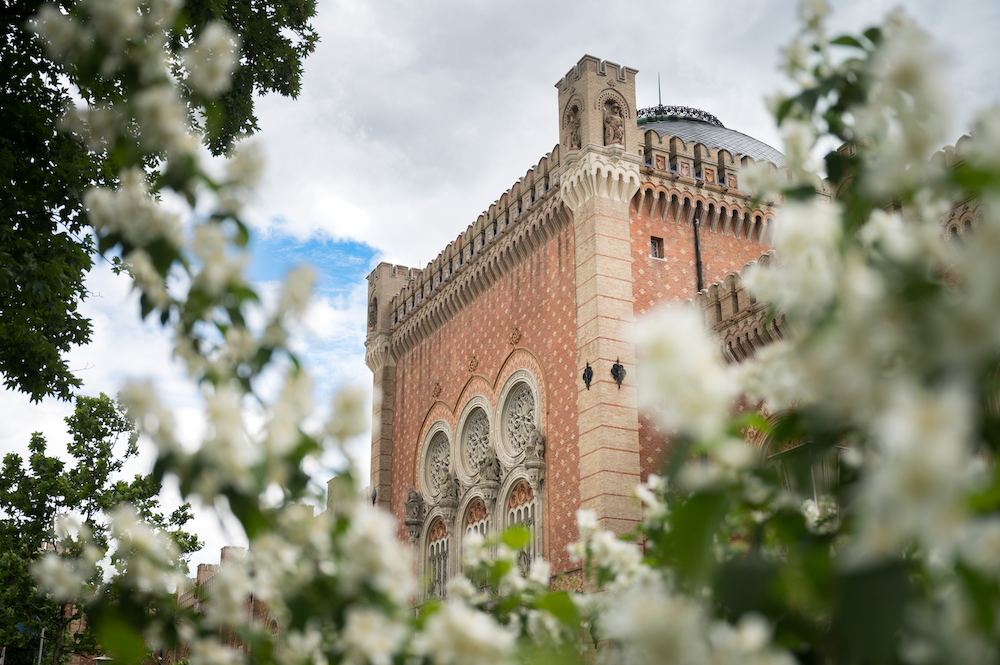
The Museum of Military History in Vienna has been undergoing a process of further development since 2023, while also facing the need for essential structural renovations.
The museum sees itself as a place where historical experience is brought into dialogue with contemporary issues. As an inclusive forum for discussion on military history, it places particular emphasis on people as actors in history, the role of the military in society across different historical periods, and the relationship between war and society.
The Museum of Military History currently preserves more than one million unique objects. As part of the Austrian Federal Ministry of Defence, it is one of the oldest and largest history museums in Europe.
Heeresgeschichtliches Museum. Foto: HBF/Ronja Klima

The museum hotspot in the heart of Vienna represents the fulfillment of a passionate collector’s visions. Spectacular architecture meets world class artworks from Klimt to Matisse, Picasso and Warhol.
Foto: Rupert Steiner, © Heidi Horten Collection
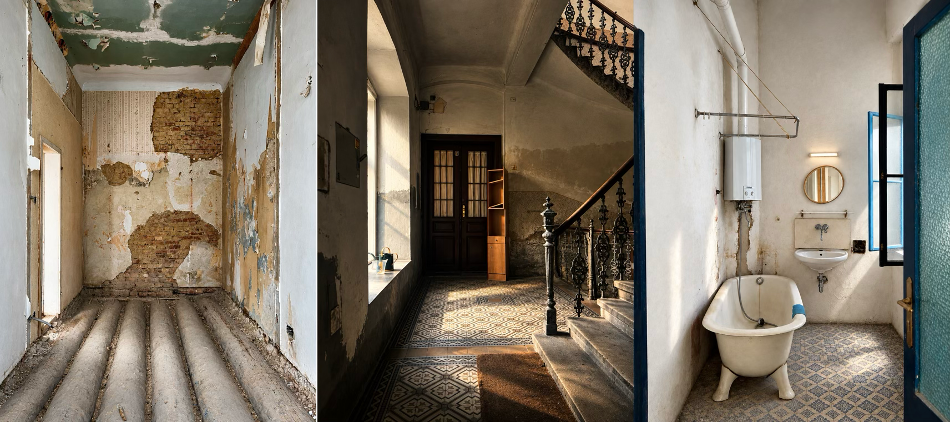
A striking late 19th-century building in Vienna’s 15th district will be transformed into the festival headquarters of VIENNA ART WEEK for one week before its renovation, hosting the festival’s 2026 exhibition.
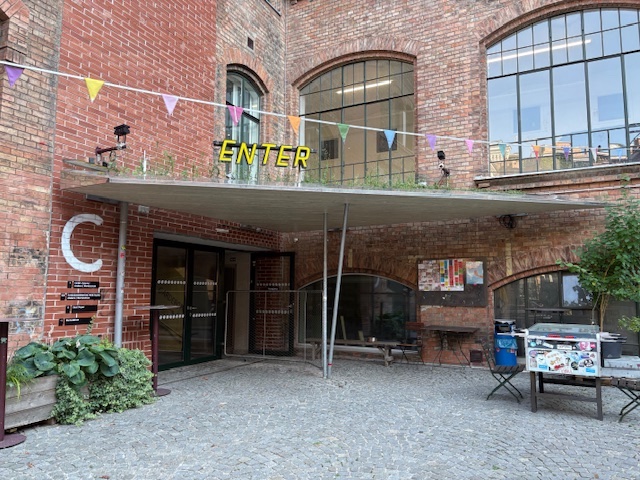
IntAkt – Internationale Aktionsgemeinschaft bildender Künstlerinnen
Währinger Straße 59/Stiege C/2.Stock, 1090 Wien
IntAkt – International Action Group of Women Visual Artists is a feminist-inspired network of women artists. It was founded in 1977 to improve the situation of women visual artists in both social and artistic spheres.
Through IntAkt, artists from Germany and abroad play an active role in cultural and political affairs. Through numerous exhibitions and projects, the network demonstrates its active commitment to addressing contemporary issues.
Eingang IntAkt, Susanne Kompast
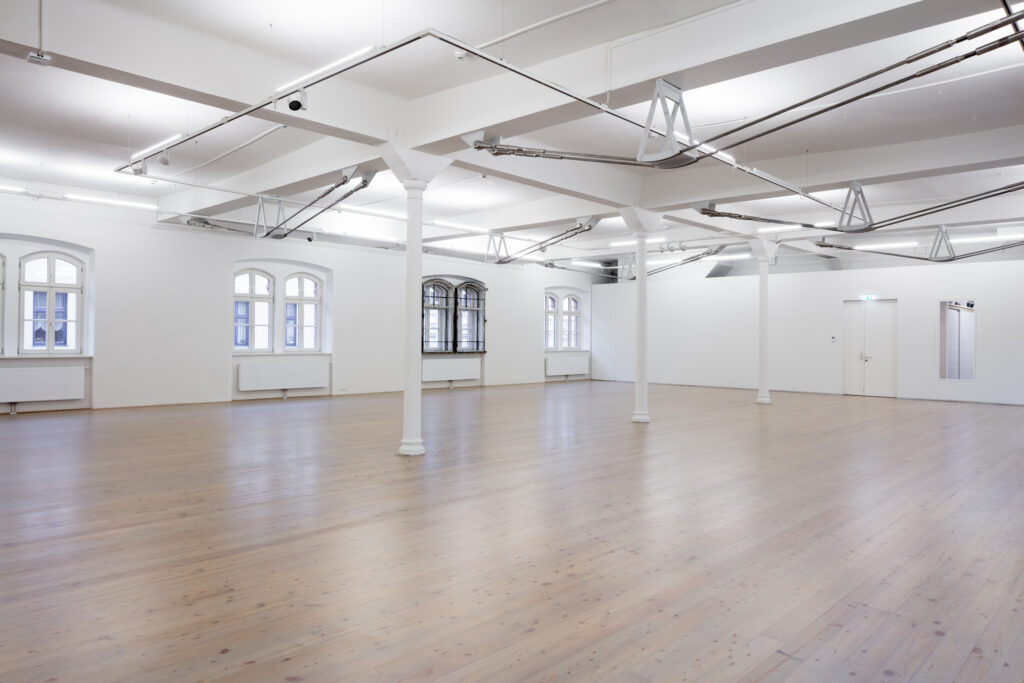
kex—kunsthalle exnergasse
Währinger Straße 59, 1090 Wien
+43 1 401 21 15 70
kunsthalle exnergasse postions itself as an exhibition space and platform for experimental, contemporary art in all its different forms, and attaches great importance to local and international collaborations.
kunsthalle exnergasse © kex—/Wolfgang Thaler

Korridor – Raum für aktuelle Kunst
Hertha-Firnberg-Straße 10/Stiege 4 (Eingang: Maria-Kuhn-Gasse 8, 1100 Wien)
Korridor – Space for Contemporary Art in Vienna is a non-profit exhibition venue for contemporary art in Wienerberg. The space opened in June 2023 with the exhibition ‘Liddy Scheffknecht – Broken Flowers’. The organisation and programming are developed by Petra Noll-Hammerstiel – an art historian and freelance curator and author based in Vienna, specialising in photography and new media – and realised in collaboration with the artists.
The space, which takes its name from its elongated floor plan, is primarily dedicated to presenting contemporary, conceptual and/or socially critical photographic and video art, whilst remaining open to interdisciplinary, site-specific installation projects. Two exhibitions are held each year. Since the second exhibition in November 2023, it has been part of the space’s concept to invite a musician, composer or sound artist to each exhibition. The exhibitions are accompanied by artist talks.
Ausstellungsraum Korridor – Raum für aktuelle Kunst, Foto: Archiv Korridor

KRINZINGER SCHOTTENFELD
Schottenfeldgasse 45, 1070 Wien
+43 1 5128142
Krinzinger Schottenfeld was founded in 2002 as Krinzinger Projekte. Various exhibitions are held at the Krinzinger Schottenfeld Gallery, presenting not only artists from the gallery programme but also young, emerging talents. Together with the Krinzinger Gallery, Krinzinger Schottenfeld invites young artists from Austria and abroad to participate in the gallery’s artist-in-residence programme, which currently includes destinations in Austria, Croatia, Hungary and Sri Lanka.
Kunst im öffentlichen Raum Wien
Nestroyplatz 1/1/14, 1020 Wien
+43 1 521 89 – 410
Kunst im öffentlichen Raum Wien (Public Art Vienna) brings contemporary art in all its facets into the public space of the city of Vienna. With the aim of anchoring art as a natural component in the center of society, the institution creates cultural spaces for action – concrete art locations as well as intellectual free spaces. The aim is to give art an active role in shaping the city and its pluralistic identity and to make public space visible as a place of cultural and political exchange.

Kunsthalle Wien Karlsplatz
Treitlstraße 2, 1040 Wien
+43 1 521 89 33
Kunsthalle Wien is the City of Vienna’s institution for international contemporary art and discourse. At its venues in Museumsquartier and on Karlsplatz, it presents exhibitions of contemporary art and contextualizes them in their social and political contexts.
© Kunsthalle Wien 2018, Foto: Jorit Aust

Kunsthalle Wien Museumsquartier
Museumsplatz 1, 1070 Wien
+43 1 521 89 33
Kunsthalle Wien is the City of Vienna’s institution for international contemporary art and discourse. At its venues in Museumsquartier and on Karlsplatz, it presents exhibitions of contemporary art and contextualizes them in their social and political contexts.
Kunsthalle Wien Museumsquartier, Foto: Stephan Wyckoff

KunstHausWien
Untere Weißgerber Straße 13, 1030 Wien
+43-1-712 04 91-0
As the first “green museum,” KunstHausWien sees itself as a central location where issues relating to the environment and sustainability are addressed in the context of contemporary art. Based on the work of Friedensreich Hundertwasser and his commitment to ecological and socio-political responsibility, the museum presents exhibitions of contemporary art and links them to an interdisciplinary, in-depth discourse program.
© Eva Kelety

Built by Karl Hasenauer and Gottfried von Semper between 1871 and 1891, the Kunsthistorisches Museum Wien ranks among the most renowned museums in the world. Its magnificent architecture provides a worthy setting for collections the Habsburgs built over centuries. These encompass objects from five millennia, i.e. from the time of Ancient Egypt to the end of the 18th century.
© KHM-Museumsverband

Künstlerhaus Vereinigung
Karlsplatz 5, 1010 Wien
+43 1 587 96 63
The Vienna Künstlerhaus, Association of Austrian Artists, is an autonomous, non-profit artists’ association. It has been engaging visitors with an open, discursive, and interdisciplinary program of exhibitions and events since its founding in 1861.
Foto: Michael Nagl

Kunstraum am Schauplatz
Praterstraße 42, 1020 Wien
+43 677 617 966 78
The “Kunstraum am Schauplatz” is located in the premises of a former horse stable in Vienna’s 2nd district. It was founded in 2008 and has been run by Lukas Willmann ever since.
The profile and self-image of the art space is that it operates as a project space with the commissioning of exhibition concepts and formats by changing, independent curators.
One focus is the presentation of mid-career artists: national and international curators and artists are invited in a balanced ratio, and the commitment also lies in the cooperation with other institutional exhibition venues, with an interest in an international orientation.
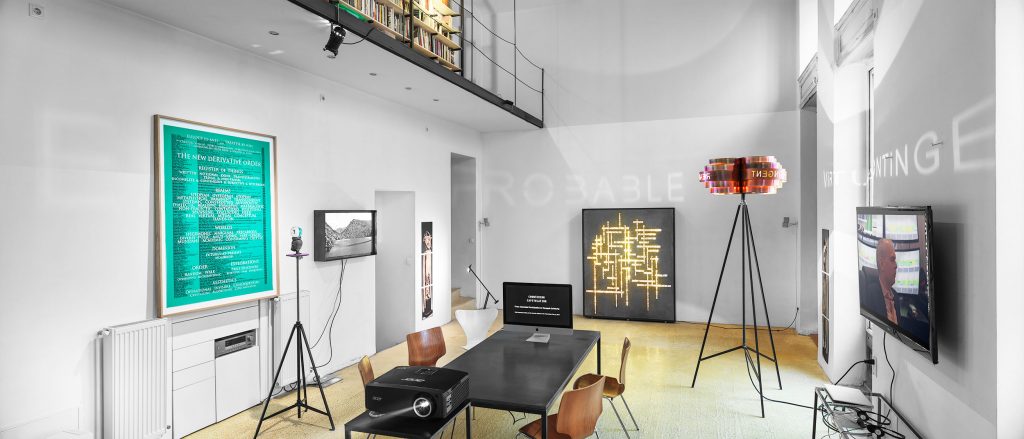
Kunstraum Eckermann Nestler
Neulinggasse 9, 1030 Wien
Art Space Eckermann and Nestler has been the artists’ studio since 2008. As well as exhibitions and presentations, it also hosts the “Technopolitics Evenings”, a series of discussions that has been held regularly since 2011 – Sylvia Eckermann and Gerald Nestler are founding members of the Technopolitics research group.
Sandro Zeizinger, 2019

The KUNSTZELLE, a former telephone booth from the 1960s, is prominently located in the courtyard of the WUK cultural and workshop centre and has been a site for artistic installations and interventions since 2006. Removed from its original context, it becomes an interface between art, everyday life and the public sphere.
Curated by initiator Christine Baumann together with Pablo Chiereghin, the program approaches the KUNSTZELLE as an open site that is continually revisited and re-examined. Artists repeatedly explore the possibilities of the space in new ways, developing site-specific works. Every three years, the program is expanded through selected projects by students of the TransArts class at the University of Applied Arts Vienna.

LEFTBANK is a new art gallery and project space in Vienna dedicated to contemporary, experimental practices. Conceived as an intersection point for diverse artistic positions, it brings together emerging and established artists in a flexible exhibition format. The space emphasizes dialogue, collaboration, and a dynamic, process-oriented approach to showing art.

Leopold Museum
Museumsplatz 1, 1070 Wien
+ 43 1 525 70-0
The Leopold Museum is home to the collection founded by Rudolf Leopold, which today comprises around 9,000 objects of Austrian art from the second half of the 19th century and Modernism. The museum’s highlight is the Vienna 1900 exhibition, which showcases the world’s largest collection of works by the Austrian Expressionist Egon Schiele, masterpieces by Gustav Klimt, the internationally most extensive permanent presentation on Oskar Kokoschka, further works of Viennese Modernism as well as artisan craftwork from the Wiener Werkstätte.
© Leopold Museum, Wien, Foto: Alexander Eugen Koller
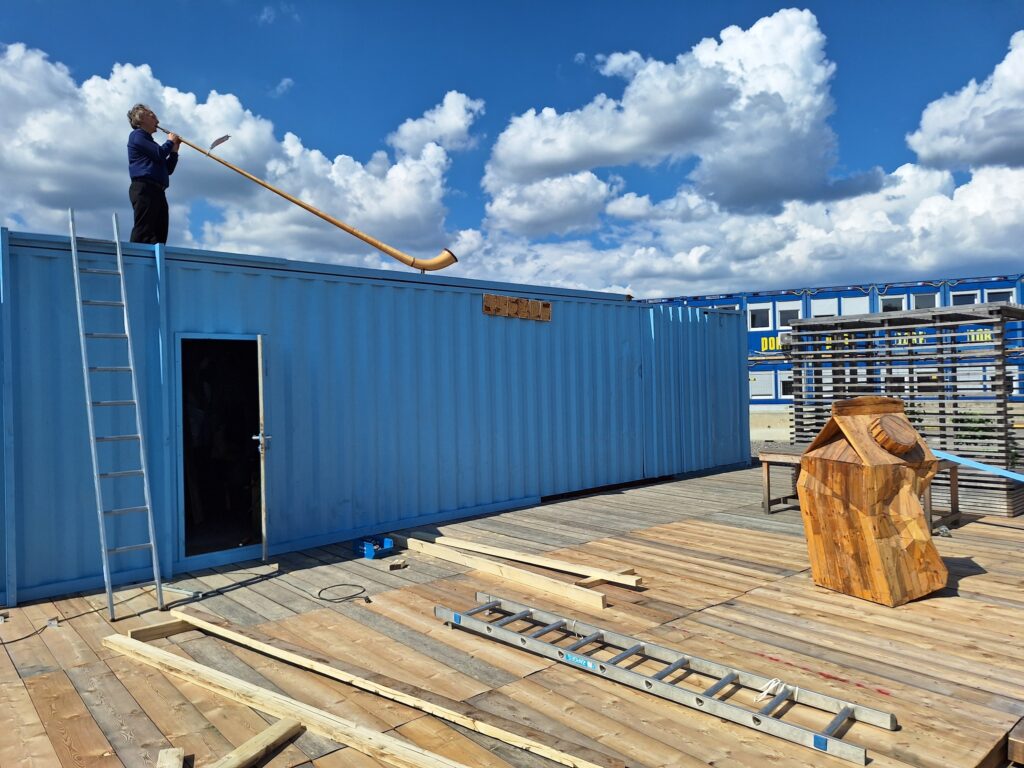
LLLLLL, Verein für Kunst der Gegenwart has been active in Seestadt since 2017. This work began with Reinhold Zisser’s ‘Notgalerie’ project.
The LLLLLL artist-run space followed in 2023 as a result of this long-standing work in Seestadt and operates there as an exhibition space for contemporary artists who engage with issues of public space.
It is the first art space in Vienna to be explicitly dedicated to this theme and, in addition to the exhibition space itself, is able to provide several thousand square metres of public space for art.
Within this framework, LLLLake is the newest venue and was established jointly by Bartosz Dolhun and Reinhold Zisser in 2026 as a hub for projects in public space.
The exhibition ‘Das letzte Abendblau’ showcases this space as well as works by artists who developed site-specific pieces as early as 2026, the year of its inception.
Artists: Bartosz Dolhun / Anna Marie Lutz / Johannes Milchram / Yevheniia Pavlova / Reinhold Zisser
The exhibition at LLLake is extended to the LLLLLL artist-run space. The opening will take place at LLLake. In the event of bad weather, the LLLLLL artist-run space will become the main venue.
LLLake - Bild vom Artspace © LLLLLL, Verein für Kunst der Gegenwart

The role of applied art in shaping our living spaces is the focus of the MAK, which operates at the interface of design, architecture and contemporary art in order to create new perspectives and explore borderline areas. The MAK aims to provide answers to the question of how design can help shape the world and expand possibilities for action and decision-making.
Moos Atelier
Glockengasse 6, 1020 Wien
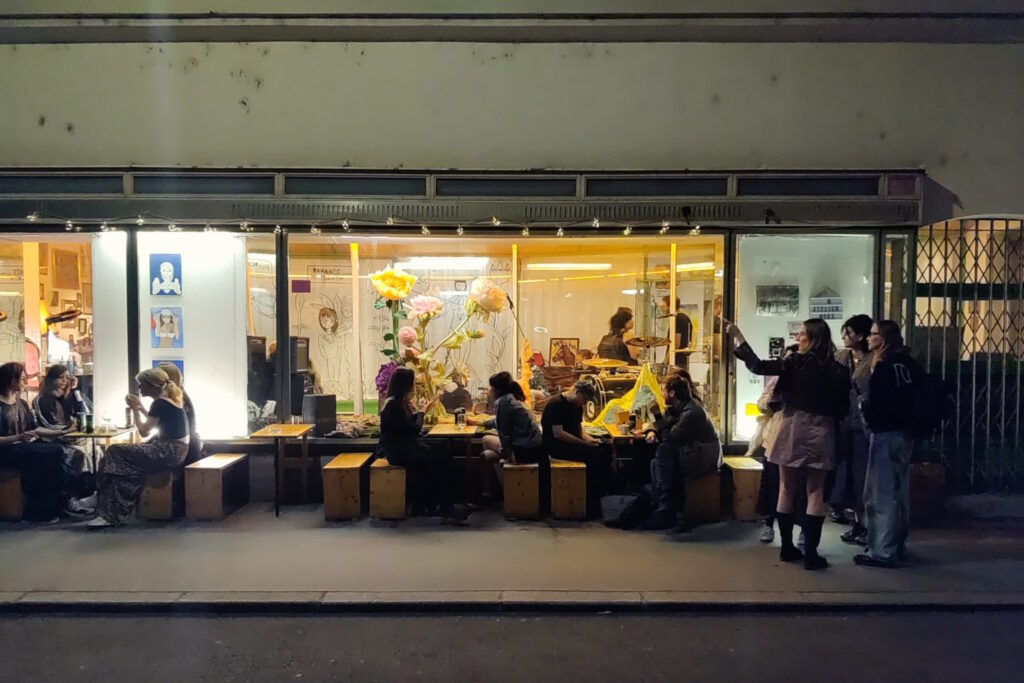
Atelier MOOS sees itself as an artistic experimental space and operates at the intersection of arts and crafts and design, as well as fine art and media art. For more than 12 years, this self-organised collective studio has been located at Glockengasse 6, in the heart of Vienna’s 2nd district, between the Augarten and the Karmelitermarkt. Alongside art exhibitions, a diverse cultural programme takes place, ranging from performance art to film screenings, theatre productions and concerts. With art markets and workshops, Atelier MOOS creates a space that, through dialogue with the public, serves as a social and cultural meeting place. The publicly accessible exhibition space, complete with a display window, invites visitors to explore the studio and get to know the 12 artists working there. As a collectively organised studio, MOOS places great importance on fostering a horizontal and supportive community of artists, which sees itself above all as an open and safe space for FINTA* individuals and people from diverse cultural backgrounds. MOOS promotes the local contemporary art scene and is open to artistic collaborations, collective initiatives and artists in the early stages of their development, who can connect with established artists here and receive curatorial support. A lively exchange with international artists and the local community makes MOOS a place of coming together and visibility.
Moos Atelier © Anne Altmeyer

mumok – Museum moderner Kunst Stiftung Ludwig Wien
Museumsplatz 1,1070 Wien
+43 1 52 500-0
mumok is one of the largest museums in Central Europe for art since modernism.

The MuseumsQuartier is one of the world’s largest cultural areas and offers around 5 million visitors a year a diverse program of art and culture in the various museums and institutions onsite. It is a place of cultural diversity, experimentation, action and mediation.
The MQ E+B also programs and curates a diverse public program with events, installations and exhibitions both in the outdoor areas and in its own exhibition spaces and runs an artist-in-residence program comprising eight studios.
(c) Alexander Eugen Koller
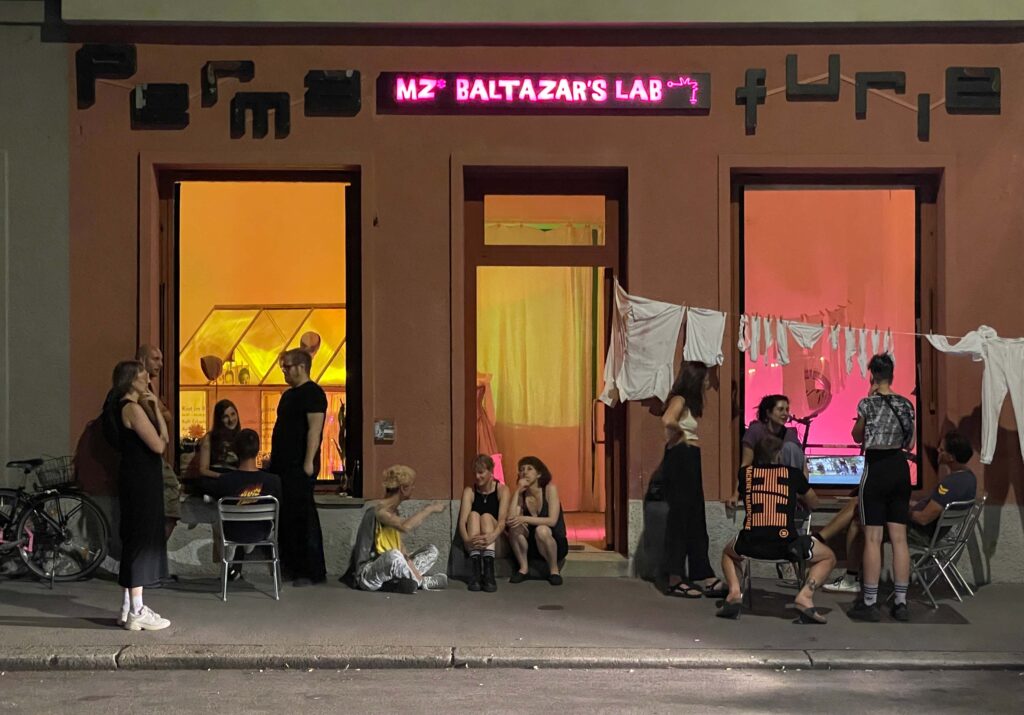
Mz* Baltazar’s Laboratory, founded in Vienna in 2009 and active across borders, defines itself as a feminist* art, making, and safer space.
The lab is led by the eponymous—and constantly evolving—intersectional feminist collective, which currently consists of six artists*, activists*, and theorists*: Lale Rodgarkia-Dara, Erika Farina, Olivia Jaques, Evamaria Müller, Anna Watzinger, and Sarah Wilhelmy.
Mz* Baltazar’s Lab has set itself the goal of creating a subversive infrastructure for art in conjunction with making/hacking, open-source technologies, and community-building. Within this framework, participants courageously experiment with technology, learn, and engage in critical reflection together. The focus is on the concrete realization of exhibitions, artistic interventions, and workshops by FLINTA* artists and practitioners at the intersection of media art, science, and gender politics in and around the premises of Mz* Baltazar’s Laboratory, currently located in Vienna’s 20th district.
Mz_Baltazar_lab

Naturhistorisches Museum Wien
Burgring 7, 1010 Wien
+ 43 1 52177-0
The Natural History Museum Vienna conveys the diversity of nature, the evolution of planet Earth and life as well as the associated cultural development of mankind and offers an inspiring meeting place where dialog and exchange between science and society take place.
© NHM Wien, Christina Rittmannsperger

Nitsch Foundation
Hegelgasse 5, 1010 Wien
+43 1 513 55 30
The Nitsch Foundation was established in 2009 to promote the important position of the artist Hermann Nitsch (*1938-†2022) and to convey and preserve his legacy “the Orgien Mysterien Theater”.
“i can’t do what i set out to do alone. i’ve always claimed a lot of help. i’ve been nudged on the path toward the Gesamtkunstwerk, and i hope the foundation will help me build this school of sensual experience.” – Hermann Nitsch on 10/22/2009

The Upper Belvedere presents some 420 masterpieces from around eight centuries of art history, from the Middle Ages to the 20th century. The focus is on Viennese Modernism and the world-famous “Kiss” by Gustav Klimt. IM BLICK-exhibitions and the contemporary series Carlone Contemporary complete the presentation.
Oberes Belvedere

Österreichische Friedrich und Lillian Kiesler-Privatstiftung
Kenyon-Pavillon im Sophienpark. Apollogasse 21/Top 3, 1070 Wien
+43 1 5130775
The Austrian Frederick and Lillian Kiesler Private Foundation was established in 1997 with the acquisition of the estate of Frederick Kiesler (1890-1965) by the Republic of Austria and the City of Vienna with the help of numerous private donors. Its mission is to research the legacy of the Austro-American architect and to inscribe it in current architectural and artistic production.

PART International Art Residency Austria
Meiereistraße 16, 1020 Wien
Founded in 2025 PART International Art Residency Austria is conceived as a residence programme for artistic research, interdisciplinary discourse and transnational cooperation, located in the south pavilion.
PART currently houses six residency studios, the multifunctional hall The Hall, and the Bar des Amateurs—spaces for production, presentation, and exchange.
PART International Art Residency Austria is a programme on behalf of the Federal Ministry for Housing, Arts, Culture, Media and Sport.
(c) Hertha Hurnaus

philomena+ acts as a networking platform for artists and people interested in cultural policies from Austria and the MENA region (Middle East and North Africa). In this context, philomena+ organizes public art projects, exhibitions, artists’ residencies, workshops, lectures, study trips and relevant publication projects.
For many decades, the Federal Ministry of Arts and Culture has been providing studios for visual artists. Currently, subsidized studios are allocated at the two locations on Westbahnstraße and Wattgasse, and the studios in the Prater are managed by the ministry.
A total of 48 studios for artists in these fields are allocated through a publicly announced open call and following a juried selection process by an independent panel of experts.

Sigmund Freud Museum
Berggasse 19, 1090 Wien
+43 1 319 15 96-11
Vienna IX, Berggasse 19. This is the address where Sigmund Freud lived and worked for 47 years until he was forced to flee from the Nazi regime in 1938. In 1971 , the Sigmund Freud Museum was founded here, and after extensive renovation and expansion reopened in 2020. Three permanent exhibitions in Freud’s former living and office rooms, an art presentation in the Showroom Berggasse 19 as well as special exhibitions present Freud’s multi-layered cultural legacy: they are dedicated to his life and work, the development of psychoanalysis in theory and practice, and its importance for the fields of society, science, and art. The history of the house at Berggasse 19 and the fates of its occupants are also brought into focus.

STRABAG ART Site
Donau-City-Straße 9, 1220 Wien
+43 1 224 22 1850
The new exhibition space, the STRABAG ART Site in the STRABAG Haus in Vienna, offers visitors interested in art a varied exhibition program with a focus on the solo exhibitions of the award winners.
All exhibitions are open to STRABAG employees and external visitors.
For an exhibition visit including a guided tour, please register using the calendar tool or via art@strabag.art.
Gironcoli-Kristall, STRABAG Artaward International 2024: Preisträger:innenausstellung mit Werken von Eva Gentner, Tina Dobrajc und Andrey Klassen, Foto: Eva Kelety

Universität für angewandte Kunst Wien
Oskar-Kokoschka-Platz 2, 1010 Wien
+43 1 71133
The University of Applied Arts Vienna is committed to an open society, creates intellectual, creative freedom and ensures a discourse that is as critical as it is empathetic. Together with teachers and researchers, students and graduates, employees and partners, the University of Applied Arts develops artistic and radical solutions for shaping and managing technological, media and social change.
© Georg Herder

Universitätsgalerie im Heiligenkreuzer Hof Wien
Heiligenkreuzer Hof Stiege 8, 1.Stock (Eingang über Schönlaterngasse 5), 1010 Wien
Gallery of the University of Applied Arts Vienna.
Universitätsgalerie der Angewandten im Heiligenkreuzer Hof, Schönlaterngasse 5, 1010 Wien

At the beginning of the 20th century, the Modern Gallery was founded in the former private rooms of Prince Eugene of Savoy at the request of the Secessionists. To this day, temporary exhibitions are presented here with their finger on the pulse of the times. They place works from the Belvedere Collection in an international context or confront the baroque palace with contemporary positions.
Foto: Roland Voraberger, © Belvedere, Wien

Vereinigung bildender KünstlerInnen Wiener Secession
Friedrichstraße 12, 1010 Wien
+43 1 587 53 07
In spirit of their motto “Die Zeit ihre Kunst. Der Kunst ihre Freiheit”, the Secession presents relevant contemporary forms of artistic expression in internationally oriented solo and thematic exhibitions. The Association of Visual Artists of the Vienna Secession is the world’s oldest independent exhibition house dedicated to contemporary art and has always been run by artists.
©Secession

Weltmuseum Wien
Heldenplatz, 1010 Wien
+43 1 534 30-5052
The Weltmuseum Wien offers insights into cultural diversity, indigenous knowledge, and traditional craftsmanship, encouraging reflection on sustainability as well as the historical and colonial contexts behind many of its collection objects – including how they were acquired in colonial settings and the power dynamics involved.
© KHM-Museumsverband

The werd:art gallery and the adjoining café are a central meeting place for artists, art lovers and, of course, coffee lovers.
Works from the neighboring workshops and studios can be admired and also purchased there.
The gallery and the gallery café are barrier-free and offer visitors an insight into the creative work of the artists of the “Jugend am Werk” association.

WEST/ OWA Otto-Wagner-Areal
Direktionsgebäude. Baumgartnerhöhe 1, 1140 Wien
WEST OWA – Cultural Creation with a View of Vienna.
WEST OWA is located in the Administration Pavilion and Pavilion 4 of the former clinic on the Otto Wagner grounds.
Surrounded by a park and Art Nouveau charm, it is the perfect place to let ideas run free. With 118 studios and 3,000 square meters of usable space, there is room for projects of all kinds.
Foto: Katharina Egg

At WEST POST, visions of all sizes find a home. With over 1,000 square meters of space and a variety of rooms—ranging from very large to very small—it offers an ideal home for artists and projects based on direct interaction.
As with all our projects, we prioritize sustainable and diverse use of space and create opportunities for exchange, connection, and community building.
Foto: Antonia Gottwald

WEST/ Reallabor Fassfabrik
Lastenstraße 19, 1230 Wien
WEST Reallabor Fassfabrik in Vienna-Liesing is a unique temporary-use concept that transforms a former industrial site into an open space for exploring questions about the future. Art, science, business, and sustainable construction engage in dialogue here, forming a vibrant laboratory where new forms of collaboration emerge.
Exhibitions, performances, and workshops make the Fassfabrik a place where visions are tested, social processes are made visible, and creative impulses for a sustainable future are sparked.
Foto: Sabine Maier

WEST Station—Industrial Charm at Franz-Josefs-Bahnhof
Right across from the “Althanstraße” tram stop, you’ll find the entrance to WEST Station, a former police station that today bears no trace of its past—except for a massive vault door. The high ceilings, large glass facades, and exposed pipes on the ceilings bring to mind quintessential art studios, and offer the perfect setting for creativity amid modern brutalism.
The ten spacious rooms can be filled with art and culture, as well as projects both large and small, without any preconceptions.
In all our projects, we focus on sustainable and diverse use of space and encourage exchange, collaboration, and networking.
Foto: Lea Sonderegger

Wiener Aktionismus Museum (WAM)
Weihburggasse 26, 1010 Wien
+43 1 35 35 07 0
Since its opening in 2024, the WAM has been the only place in the world to permanently present Viennese Actionism as the most radical art movement of the 20th century and place it in a contemporary context.
Photographs, drawings, sculptural objects, and a comprehensive documentation of its leading figures – Günter Brus, Otto Muehl, Hermann Nitsch, and Rudolf Schwarzkogler – provide the basis for scholarly exploration of this art, which remains relevant today.
WAM Wiener Aktionismus Museum, Wien ©Boxquadrat, courtresy WAM