Strikes, resignations, dramatic performances—and nudity at the Austrian Pavilion. 61st Venice Biennale
No trace of minor keys: Amid protests and spectacular installations, the oldest and largest exhibition of contemporary art is more political and charged than ever before. By Sabine B. Vogel.
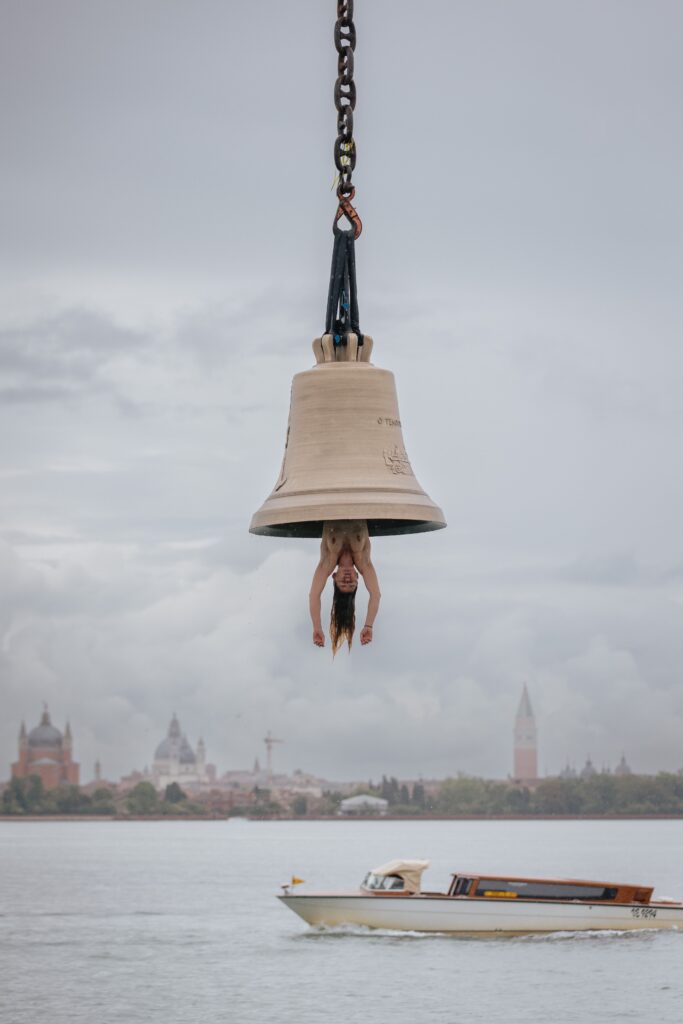
Florentina Holzinger, Opening Etude, Seaworld Venice, 2026. Copyright Helena Manhartsberger
27,935 visitors during opening week, including 3,733 accredited journalists. Endless lines of people in the pouring rain. Protests at the Arsenale against the Israel Pavilion, in the city streets against the Russia Pavilion. Pavilions closed due to Israel and Russia — if art is a barometer of the times, then this year’s 61st Venice Biennale points to escalating tensions. For even the Golden Lions, the awards for pavilions and individual artists, are not spared.
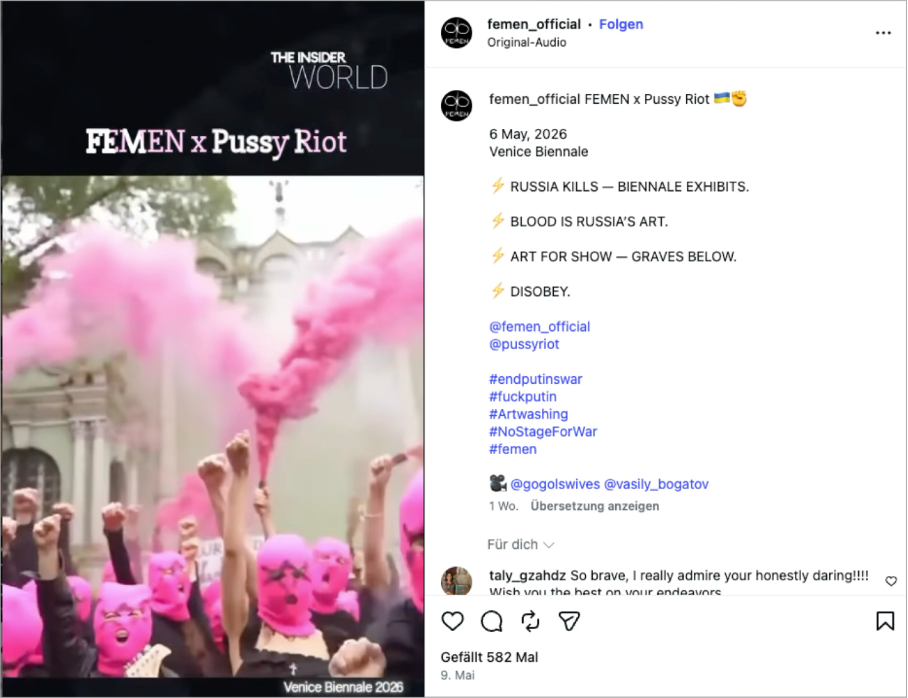
Joint protests by FEMEN and Pussy Riot in front of the Russian Pavilion in the Giardini © Instagram account femen_official
Initially, the jury decided not to consider Israel and Russia for the awards—that is, countries whose political leaders have been convicted by the International Criminal Court of serious crimes against humanity. In response, the artist behind the Israel Pavilion threatened to file a lawsuit with the European Court of Human Rights. The Biennale Foundation’s leadership offered the jury no support, only informing them that they could be held “personally liable” in the event of a legal dispute. Consequently, the entire jury resigned.
No Lions? Actually, two “Leoni dei Visitatori,” or “Visitors’ Lions,” are to be awarded on November 22, the last day of the Biennale, through a public vote for the best contribution to the main exhibition and the best National Pavilion. On May 9, around 100 artists from the main exhibition (including Alfredo Jaar, Michael Joo, Walid Raad, and Laurie Anderson) and more than 20 national pavilions (including Belgium, Luxembourg, France, and Switzerland) declared, out of solidarity with the resigned jury, that they did not wish to be considered for the prizes. In their statement, they refer to a “populist substitute model” and a “depoliticization of the crisis.”
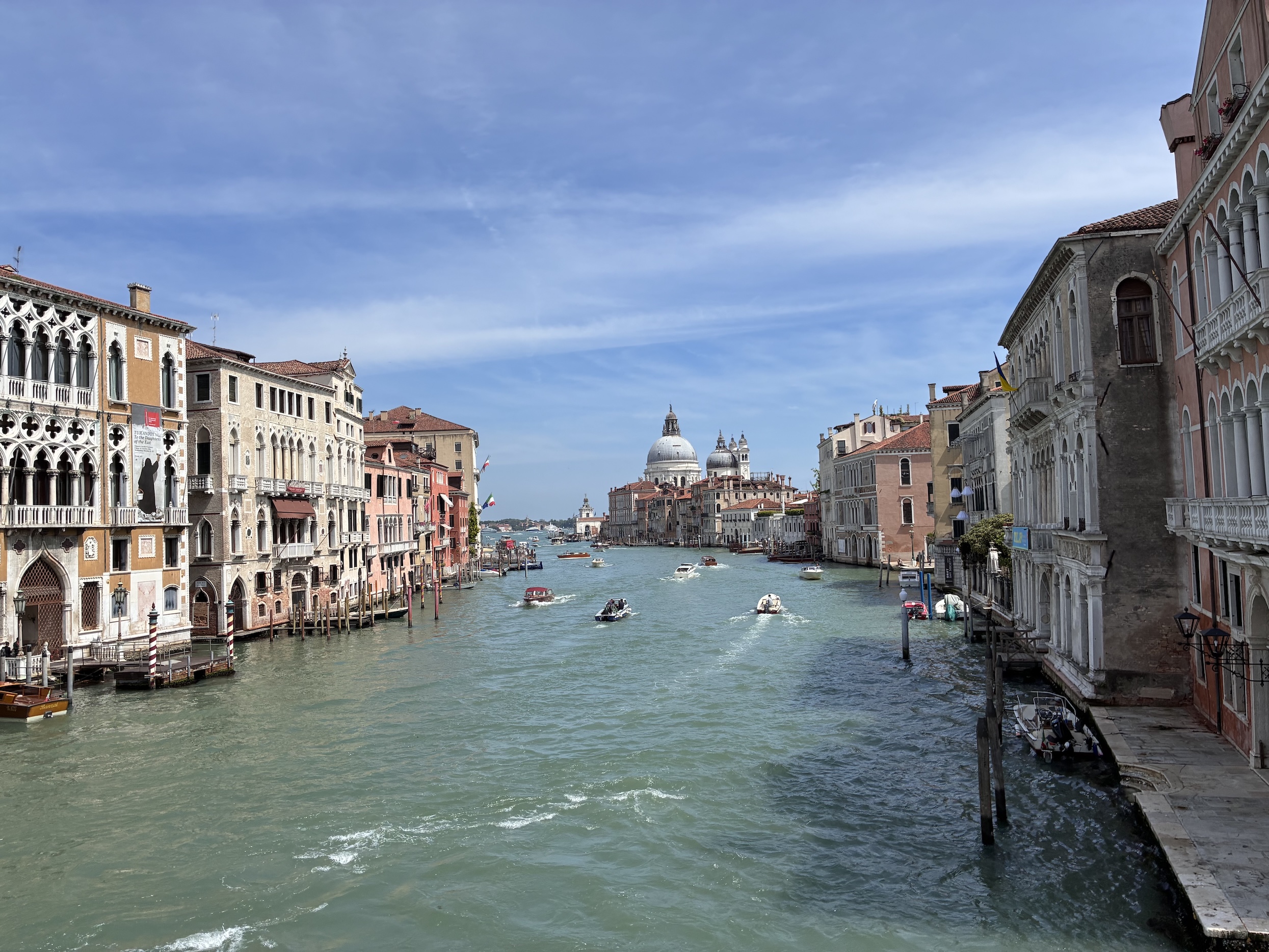
A rare quiet moment on the Grand Canal © T. Nickl
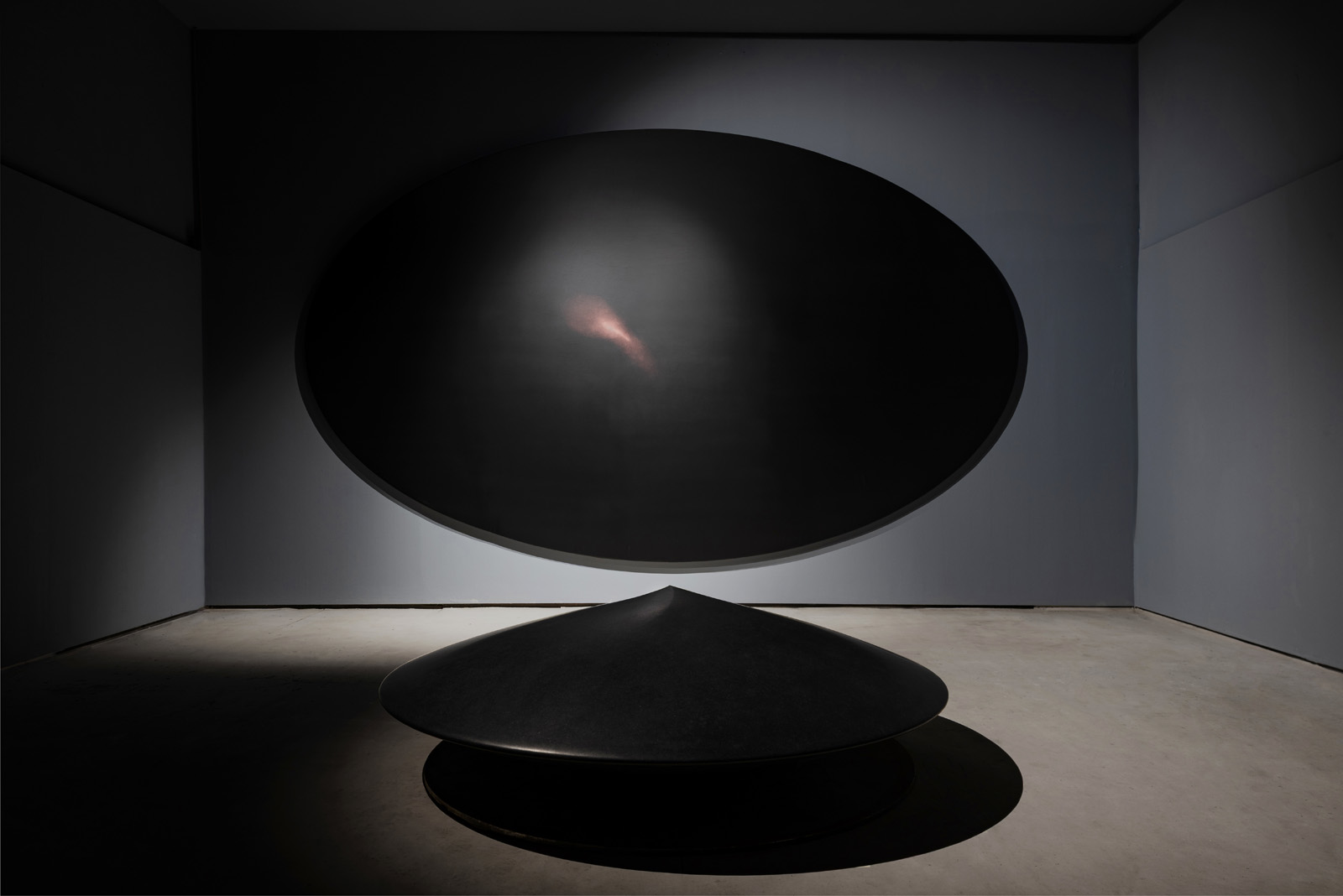
But it is not just these events that make the 61st Venice Biennale unusual. Many pavilions also rely on dramatic installations. Matías Duville transforms the Argentine Pavilion in the Arsenale into a salt desert: The floor of the heavily darkened room is covered with white salt. On top of it, drawings of cars, roads, or mountains are applied with black carbon dust, resembling smudged traces. It looks like an apocalyptic landscape, a world of ecological crises and stark contrasts.
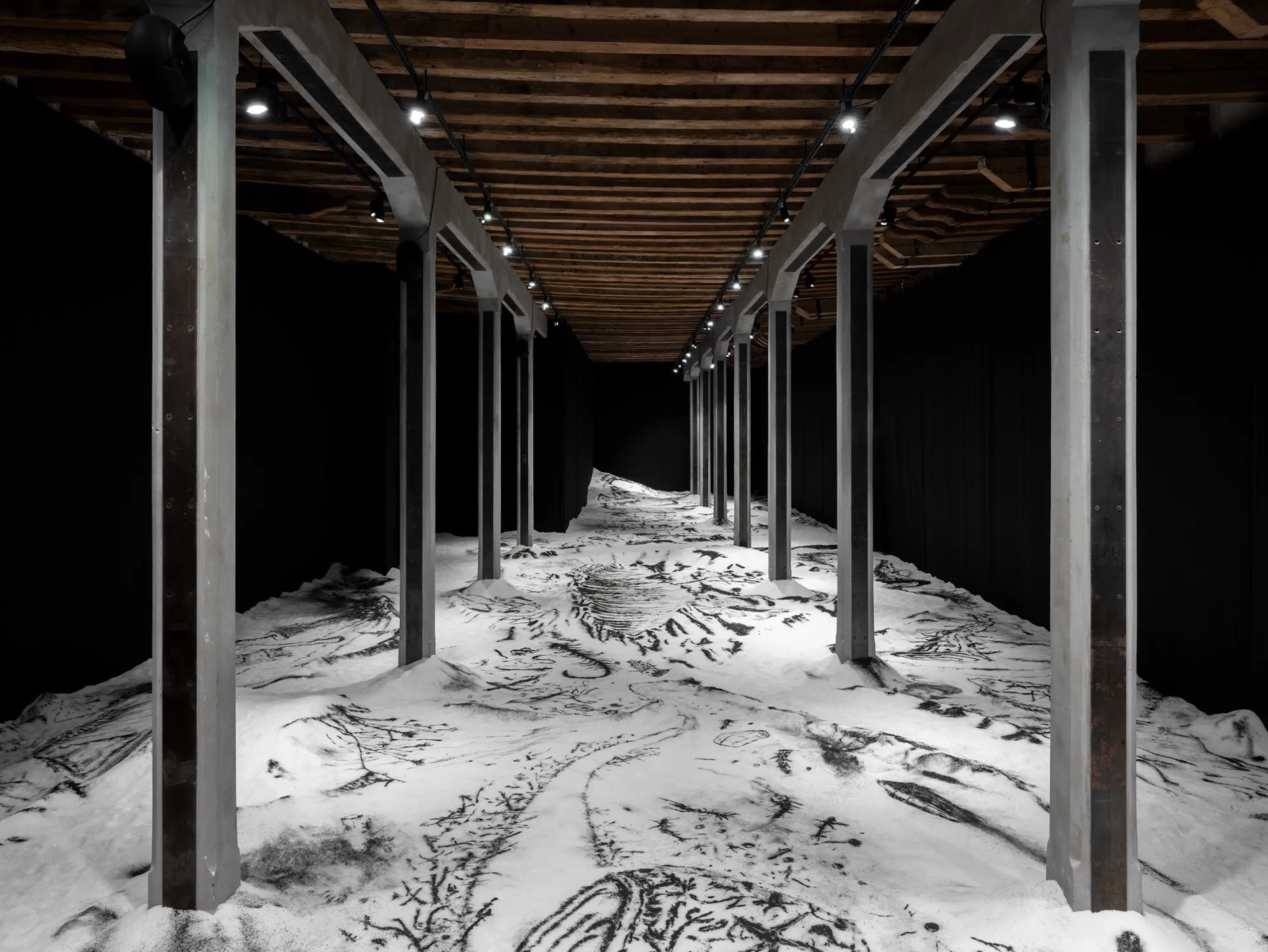
Matias Duville, Monitor Yin Yang. Argentina Pavilion. Photo: Giacomo Bianco
Next door, Dana Awartani’s dimly lit Saudi Arabian Pavilion, illuminated by spotlights, is laid out like an archaeological site: fragments of ornamentation from 23 cultural heritage sites in Palestine, Syria, and Lebanon serve as a reminder of how many mosques, palaces, caravanserais, necropolises, and churches have been destroyed in recent years. Craftsmanship is presented as a repository of knowledge and history.
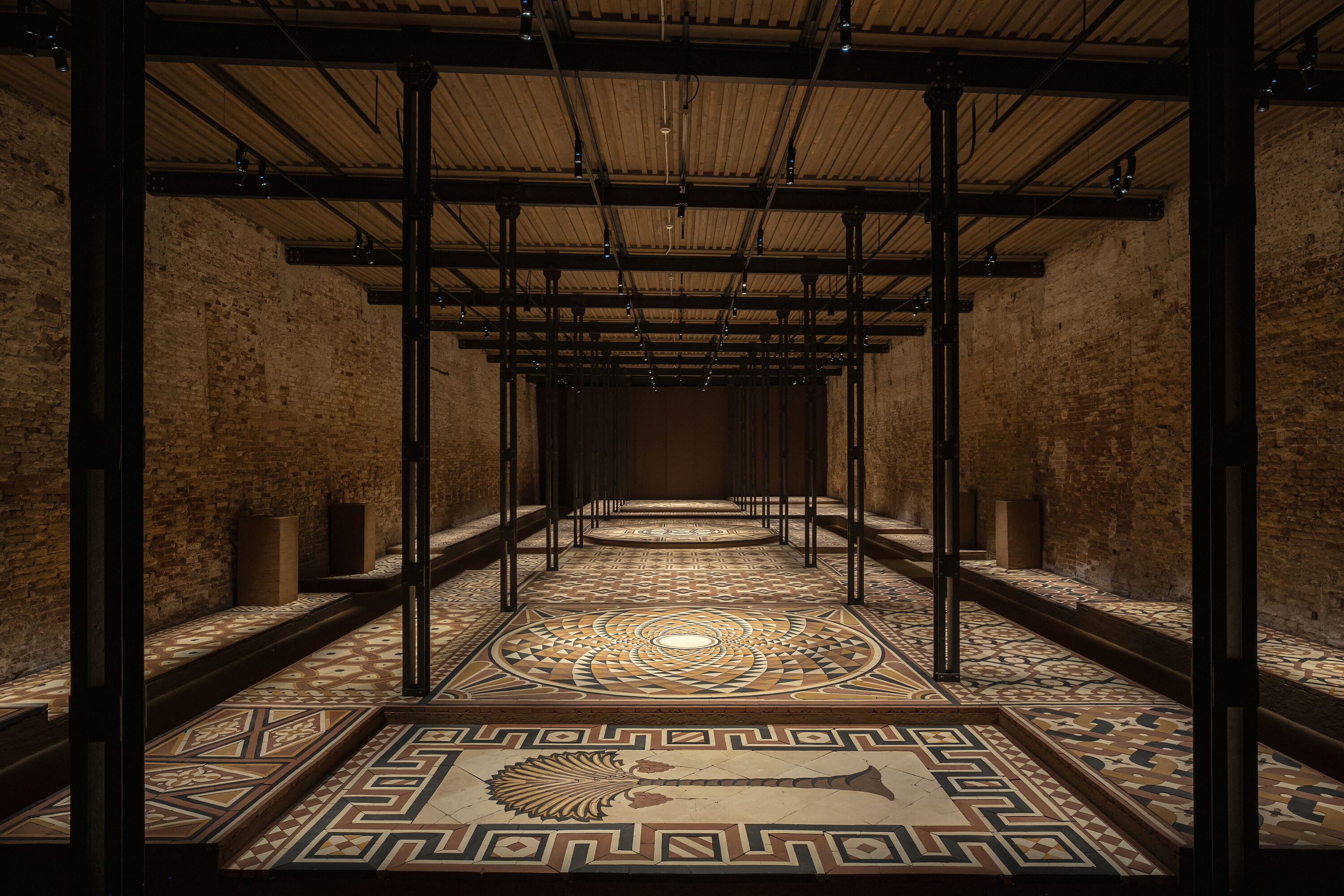
Dana Awartani, May Your Tears Never Dry, You Who Weep Over Stones. Photo courtesy of the artist and the Commission for Fine Arts, Commissioner of the Saudi Arabian National Pavilion
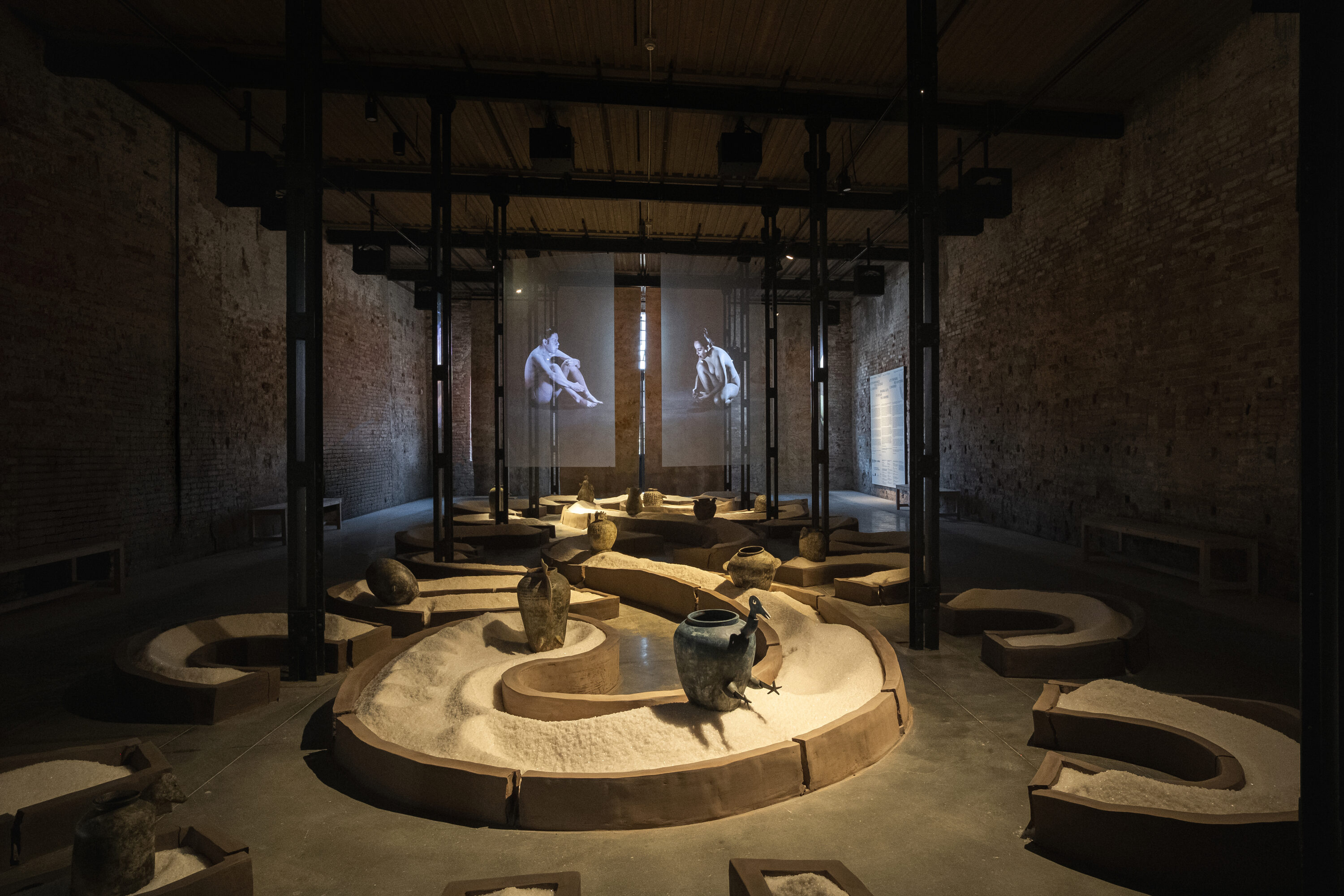
In the dramatic semi-darkness, we also make our way through the Mexico Pavilion, where the artist duo RojoNegro has arranged clay bowls filled with salt on the floor in the shape of the letter U—“symbols of language,” as explained. Scattered among them are vessels reminiscent of Mesoamerican cultures, many in the shape of birds; above them float two screens showing projections of a highly expressive dance.
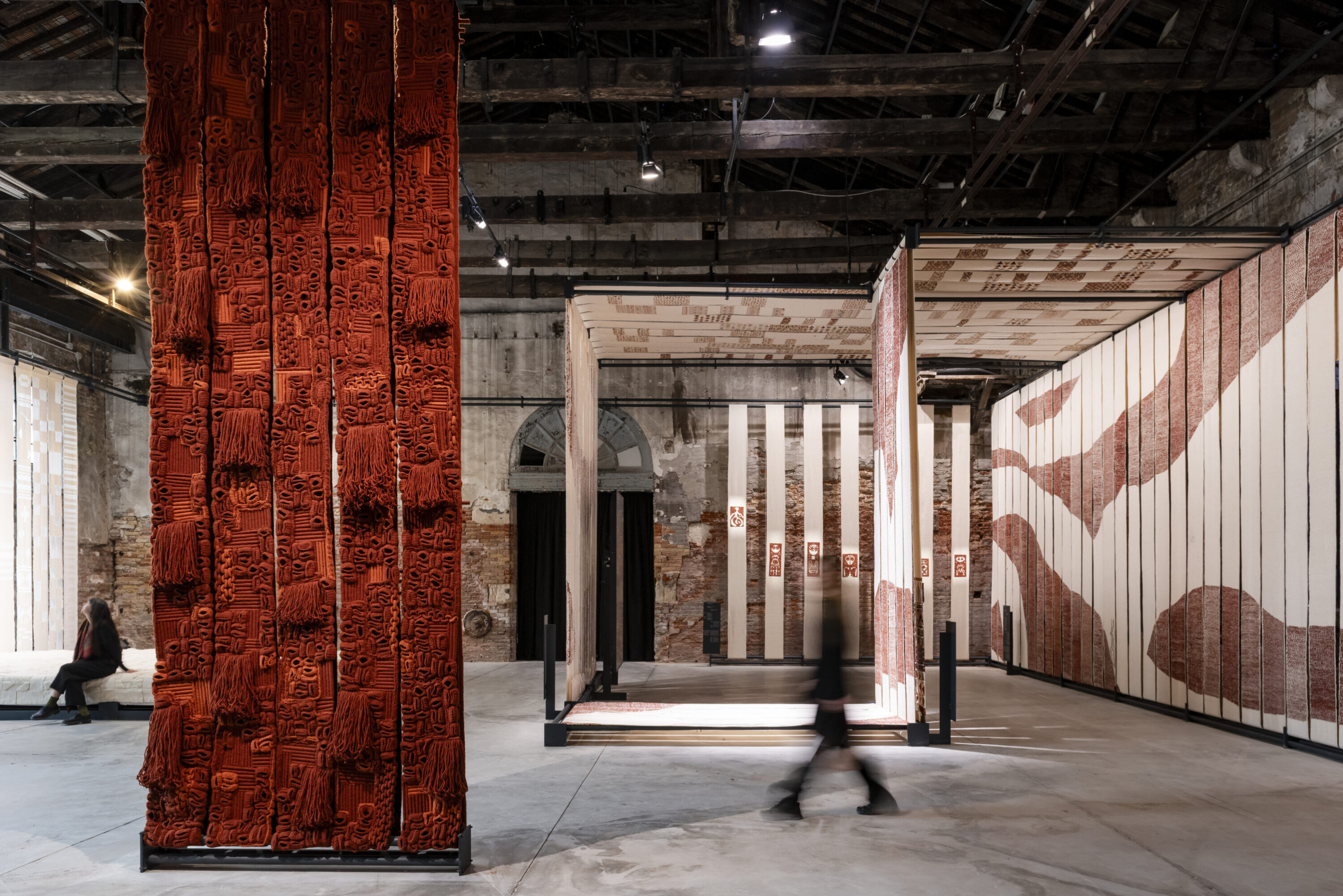
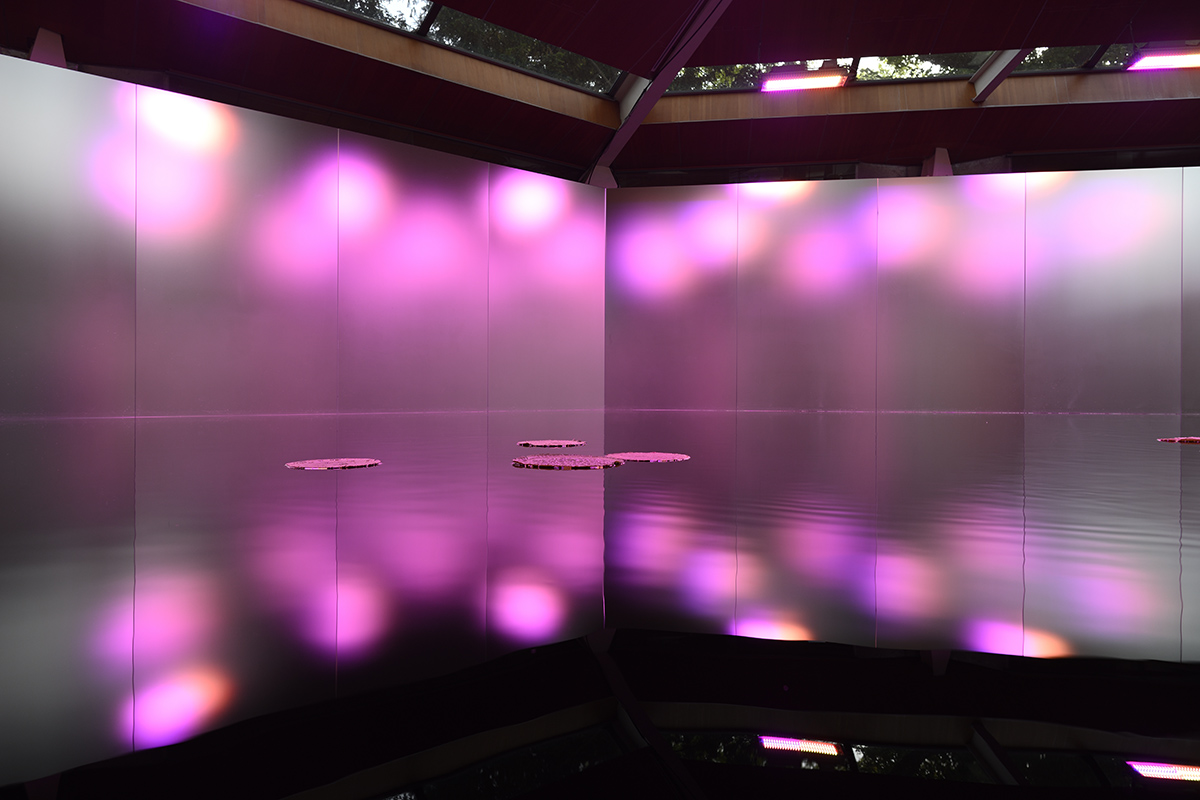
As in the Peru Pavilion with Sara Flores’ textiles full of indigenous patterns and in the Morocco Pavilion with Amina Agueznay’s weavings, ritual, collective memory, and the knowledge of ancestors often serve as the central reference for so many pavilions. And as in Egypt (Armen Agop) or Canada (Abbas Akhavan), visitors are meant to find peace in a spiritual environment.
How different, by contrast, is Florentina Holzinger’s work in the Austrian Pavilion! Koyo Kouoh, the curator of the main exhibition who tragically passed away unexpectedly last year, set the overarching theme as “In Minor Keys”—which Florentina Holzinger delightfully ignores.
The Austrian Pavilion, built in 1934 for art to be viewed with reverence, has now become a theater for naked acrobats. The large gate is locked and doesn’t open until 11:00 a.m., at which point the waiting audience is allowed to stream inside. The rooms are flooded with water; here, one scene after another is performed according to an additive script: One performer circles around on a jet ski, others climb up and down a weather vane decorated with bronze casts of the performers; later, in the small back room, one contorts herself into yoga poses, while in the center, another endures for hours, almost motionless, in a water tank. Next to it stand two portable toilets, which supposedly fill the tank with treated urine—what a joke! In the back room on the right, brown water splashes against the window from time to time. In front of the pavilion, a crane carries the bell with a human body serving as the clapper.
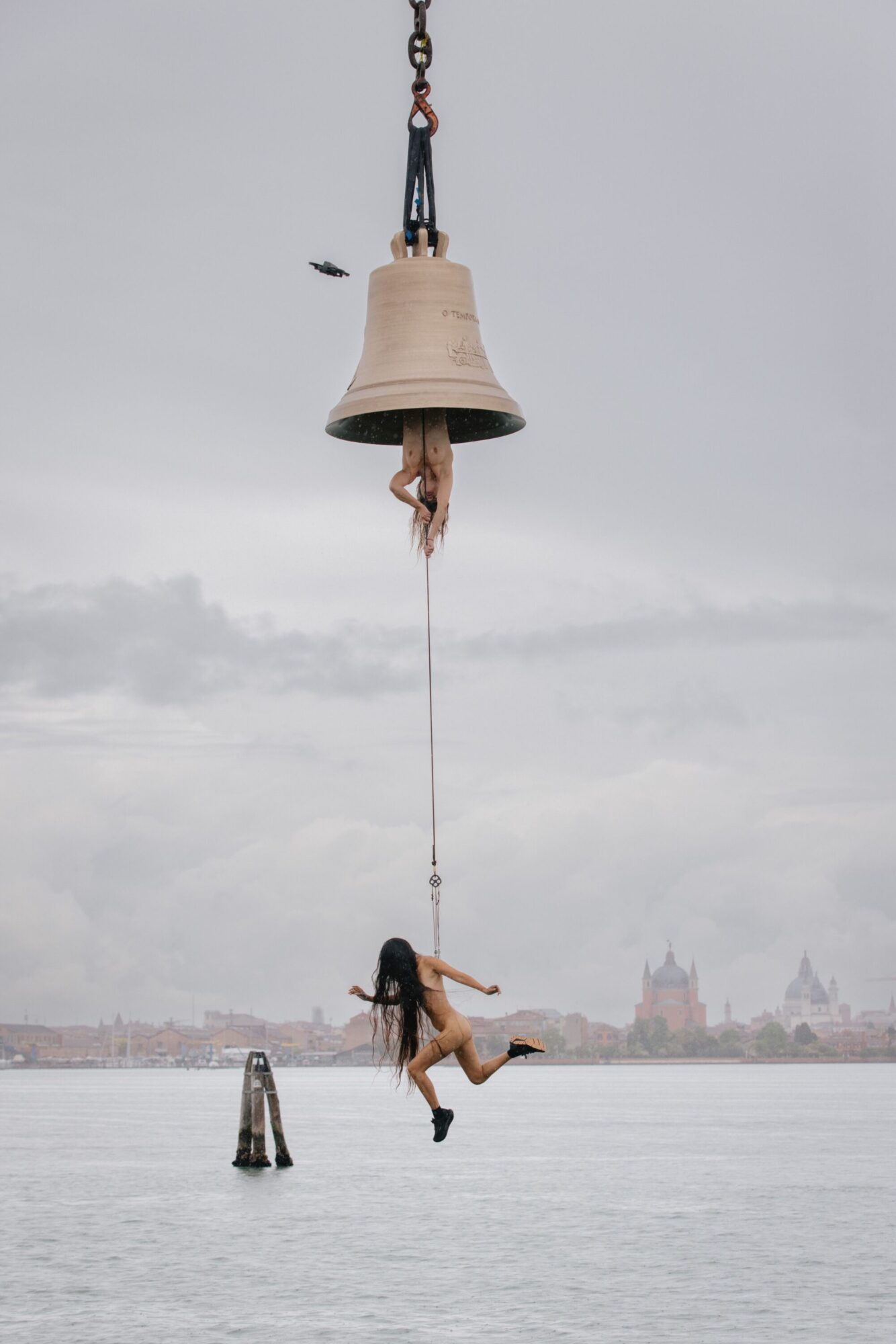
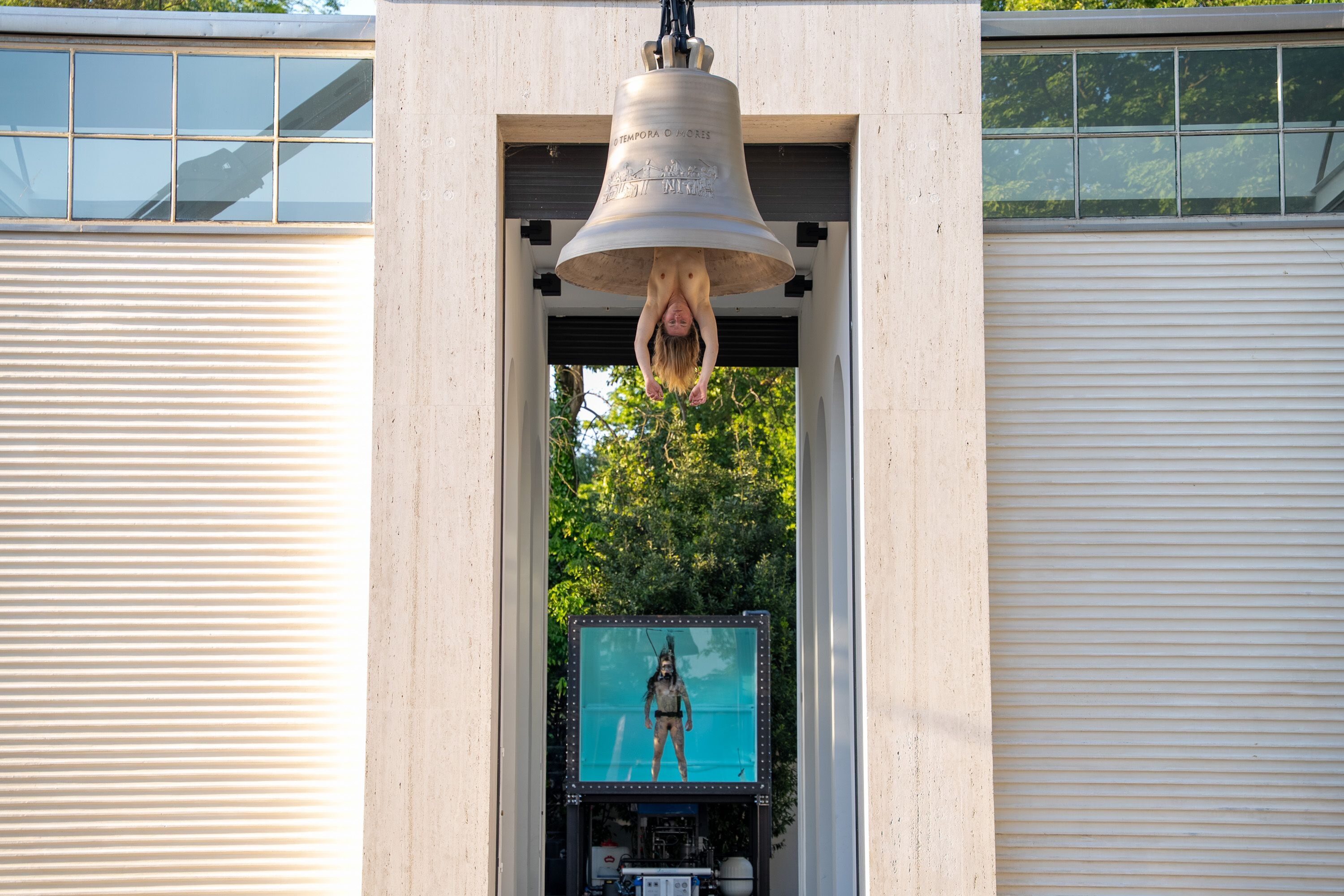
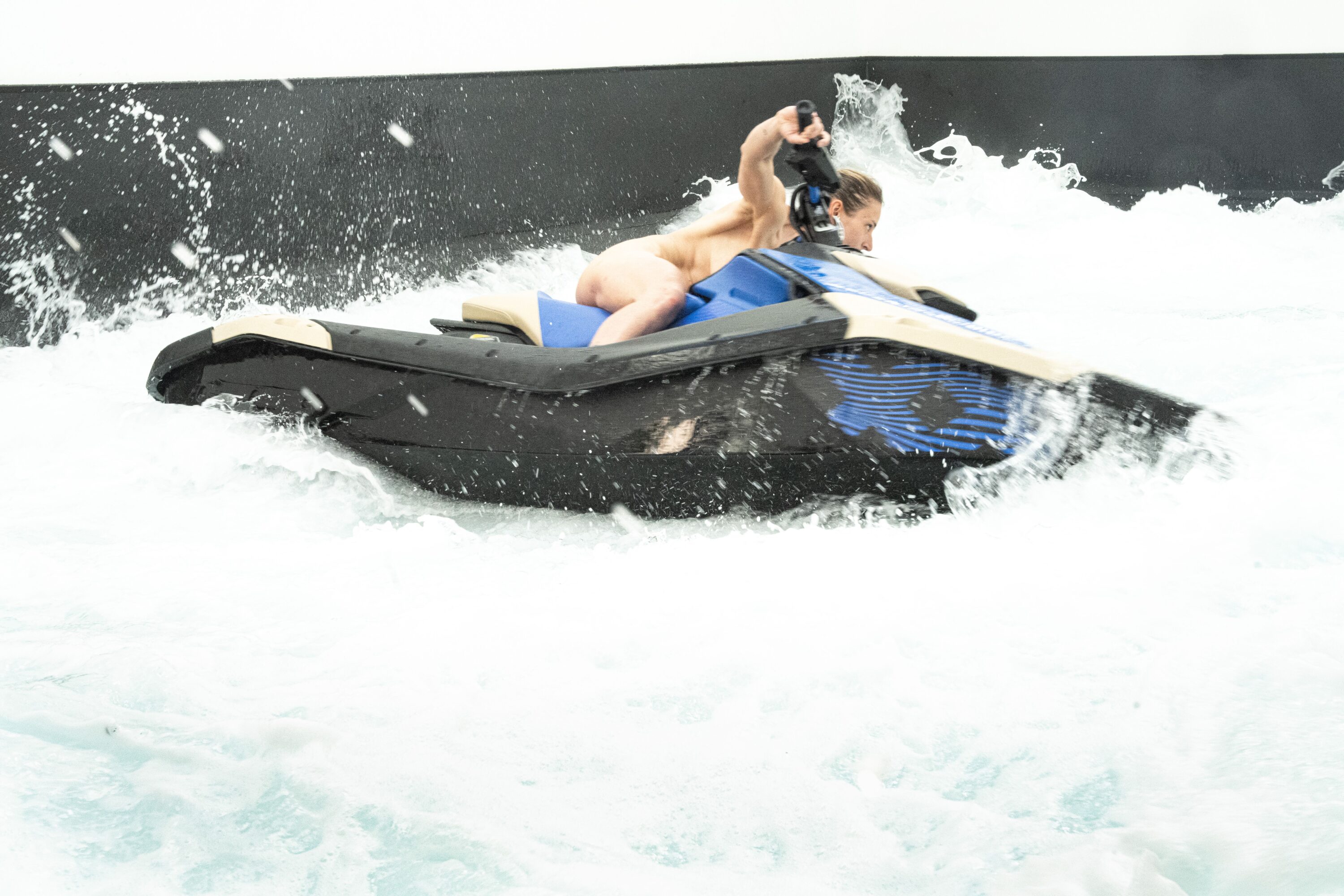
It brings to mind the medieval imagery of hell found in the works of Hieronymus Bosch or Pieter Bruegel—what a dramatic contrast to the quiet works on display all around, exploring ancestral knowledge. But wait! The press release does, after all, find a connection to the overarching theme: “In response to this year’s Biennale theme In Minor Keys, SEAWORLD VENICE works with the impure to subvert the glossy spectacles of power and progress.
Through the direct confrontation of body and machine, Holzinger breaks through aesthetically “perfect” surfaces and exposes the raw, unvarnished realities of social and ecological crises—truths that are often smoothed over in institutional narratives. In these “minor keys,” the pavilion becomes a site of radical feminist resistance, where the body is reappropriated to overcome hierarchies and assert self-determination in a collapsing world.” What truths, what narratives, what resistance? Never mind—the audience loves it. Incidentally, Austria is not participating in the rejection of the Audience Lion.
BIENNALE DI VENEZIA 2026
In Minor Keys
Through November 22, 2026