Loss of Control – Guglielmo Castelli at Kunsthalle Wien am Karlsplatz
In the austere space at Karlsplatz, the Italian artist creates a surprising, dreamlike visual world. A text by Sabine B. Vogel.
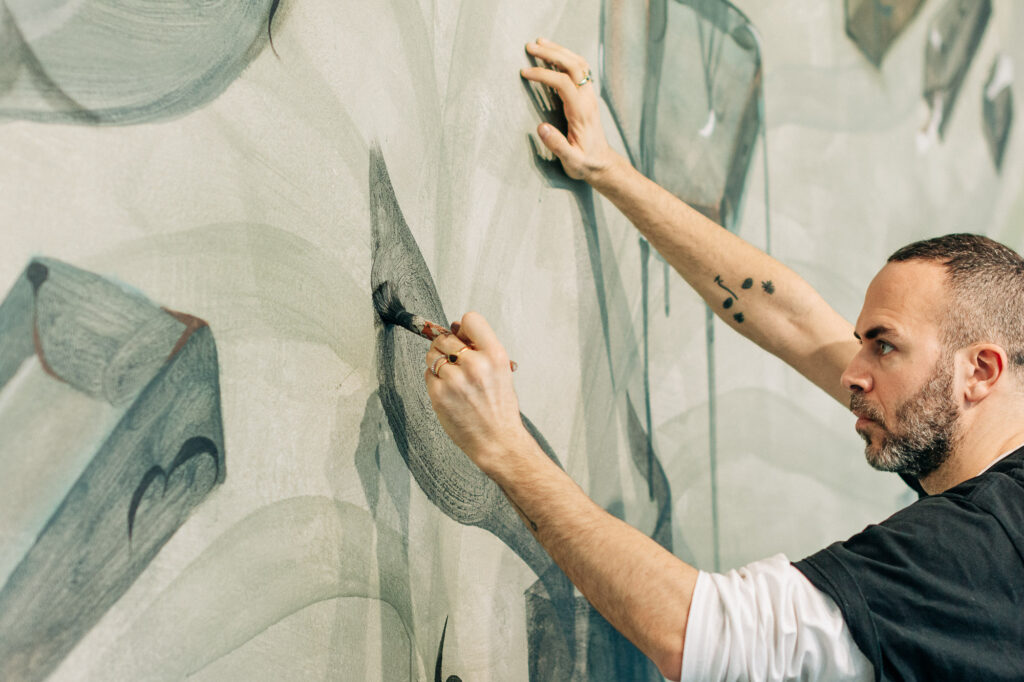
Guglielmo Castelli painting the mural for the exhibition Sweet Baby Motel, Kunsthalle Wien 2026 Foto: Daniel Kalkhofer
It has been a long time since an exhibition at Kunsthalle am Karlsplatz has been this delightfully theatrical: Guglielmo Castelli’s mural stretches 22 metres in length. Born in Turin in 1987, the artist describes his work as unfolding in the “style of a children’s book.” This is Castelli’s first institutional solo exhibition outside Italy, a transfer from Turin’s Castello di Rivoli. This year, the Kunsthalle is showing only collaborative projects, emphasizes director Michelle Cotton—it’s financially more sensible and helps build a network.
The mural was created especially for Vienna. Its point of departure was the fairy tale Hansel and Gretel, the artist explains at the press conference. Of the siblings abandoned by their parents in the forest and encountering the wicked witch in the gingerbread house, little can be found in the painting. Only the house can be identified with some goodwill – references in Castelli’s work tend to be loose associations. It has been “overturned,” he says, in order to “question hierarchies and control.”
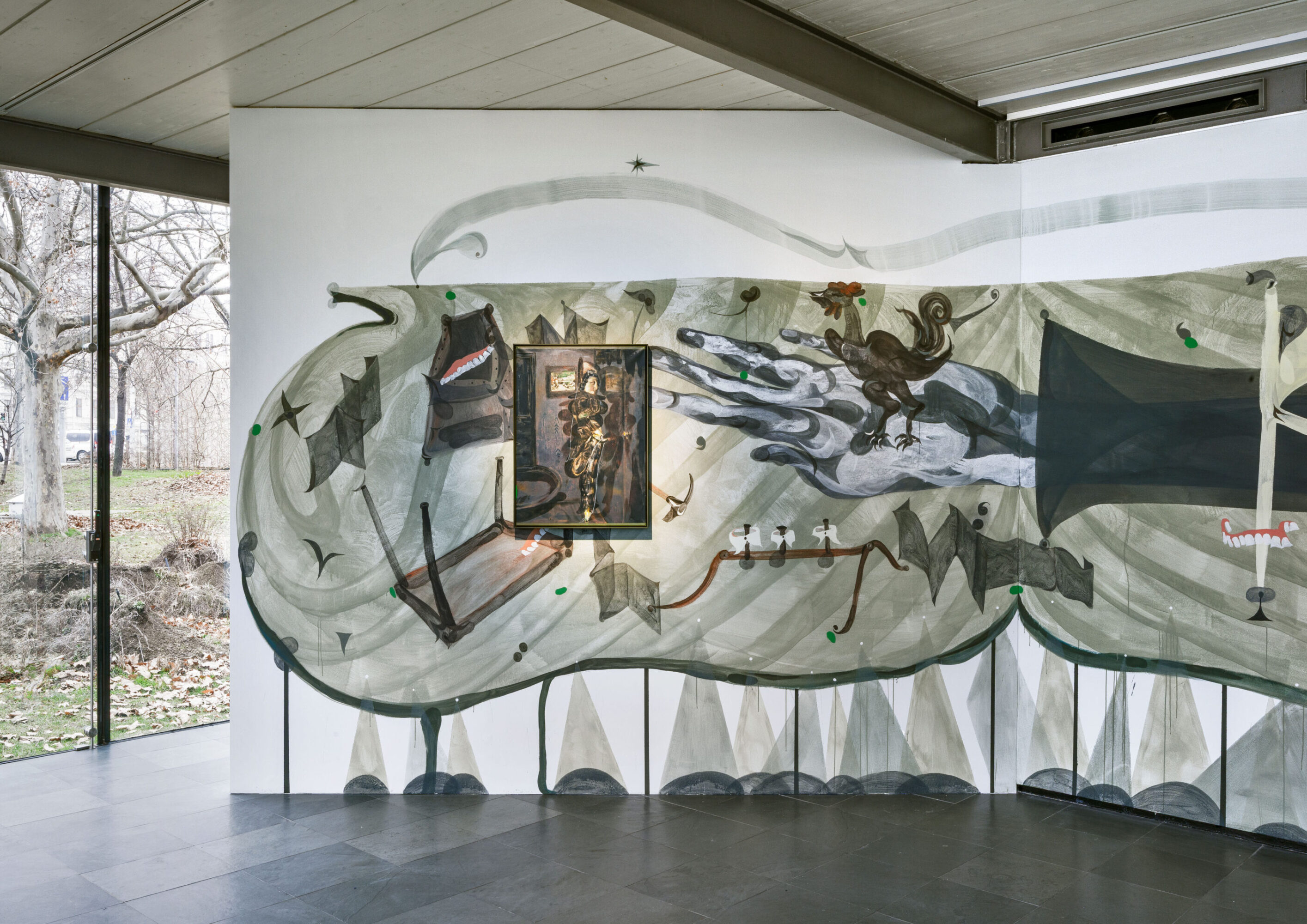
installation view Guglielmo Castelli: Sweet Baby Motel, Kunsthalle Wien 2026 Courtesy the artist; Mendes Wood DM, São Paulo/Brussels/New York/Paris and Sylvia Kouvali, London/Piraeus, photo: Iris Ranzinger
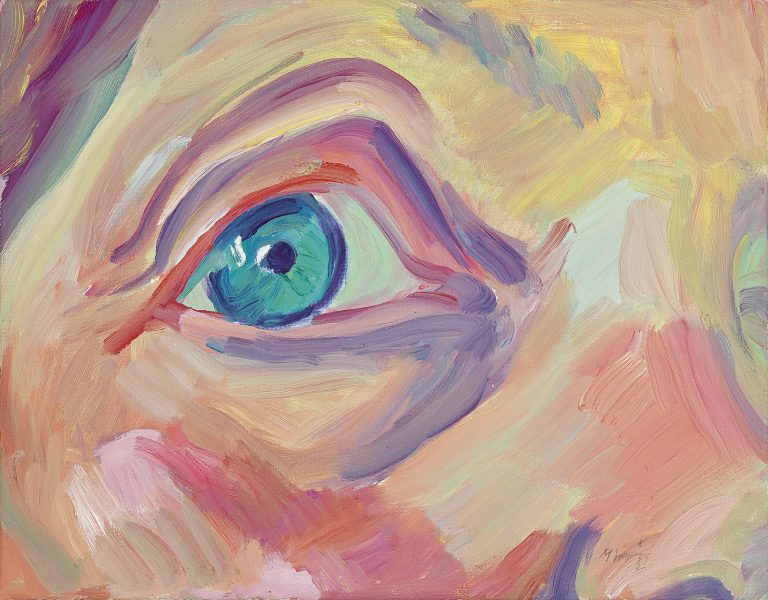
And that, at least, Castelli achieves perfectly. Loss of control seems to be the central theme of his mural. Against a gray-brown background, body parts and figures float, fall, and fly in a nebulous space. A set of teeth appears repeatedly—not a symbol, he clarifies when asked, but a reference to childhood. Scattered across the mural are seven oil paintings, often featuring a harlequin as the protagonist, once in a “Smoking Room.” His visual world is surreal, fragmented, uncanny, and oddly old-fashioned in painting technique and composition. Castelli is definitely not depicting the fairy tale itself, but rather the underlying mood of the narrative—a menacing drama, a world unraveling at the seams.
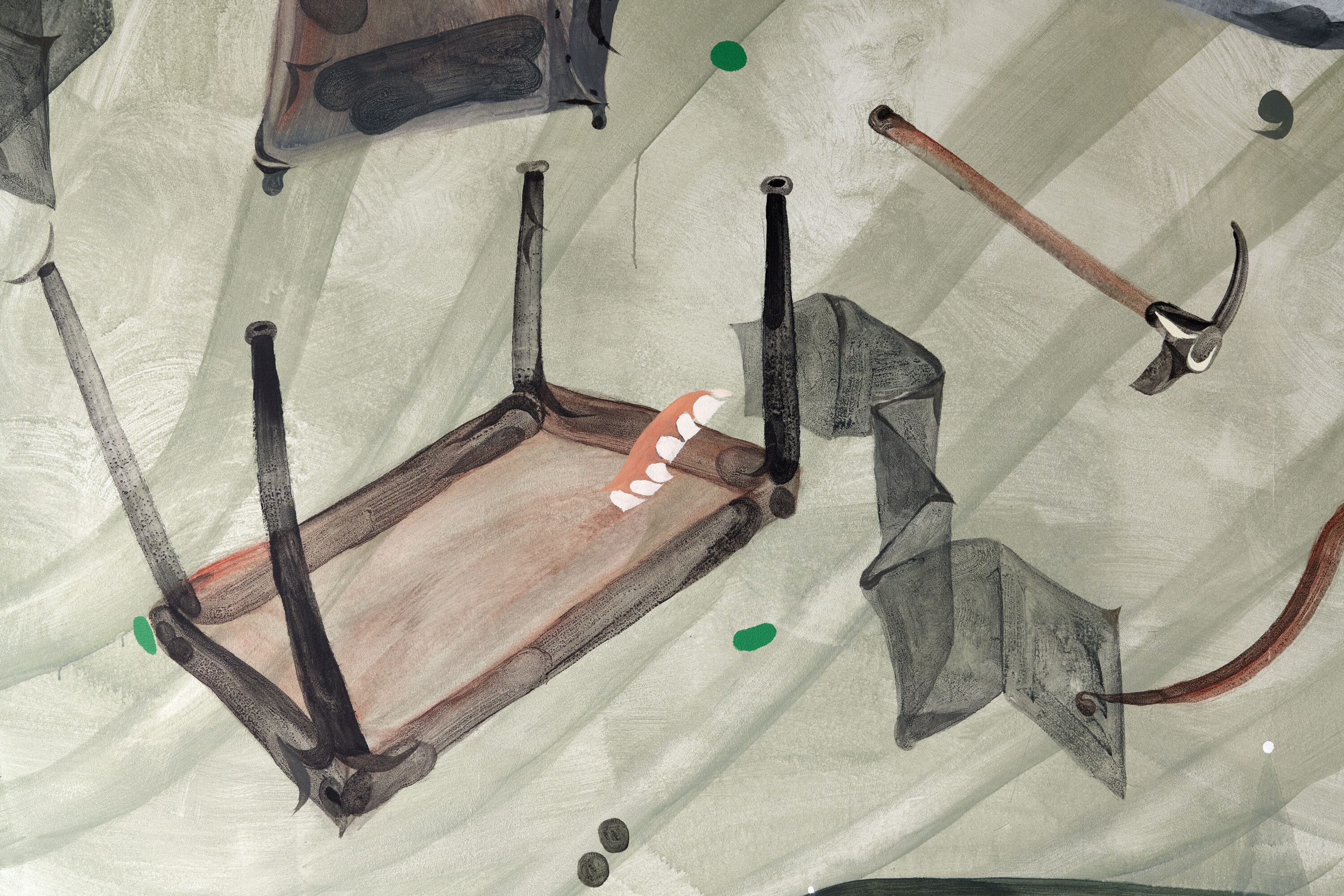
Installation view Guglielmo Castelli: Sweet Baby Motel, untitled mural (detail), 2026, Kunsthalle Wien 2026 Courtesy the artist; Mendes Wood DM, São Paulo/Brussels/New York/Paris and Sylvia Kouvali, London/Piraeus, photo: Elmar Bertsch
This atmosphere also permeates his display cases, filled with cut-out paper shapes on miniature tables labeled “Kitchen” or “Bedroom.” The forms can be read as abstracted furniture. While Castelli’s background as a theater set designer shines through a bit too strongly here—his objects sometimes resembling stage design drafts—together, the vitrines and paintings create a surprising, dreamlike visual world within the austere space at Karlsplatz. The exhibition title, Sweet Baby Motel, incidentally, is yet another reference in this bundle of loose allusions: it is the inscription on a small plaque in his Turin studio and living space.
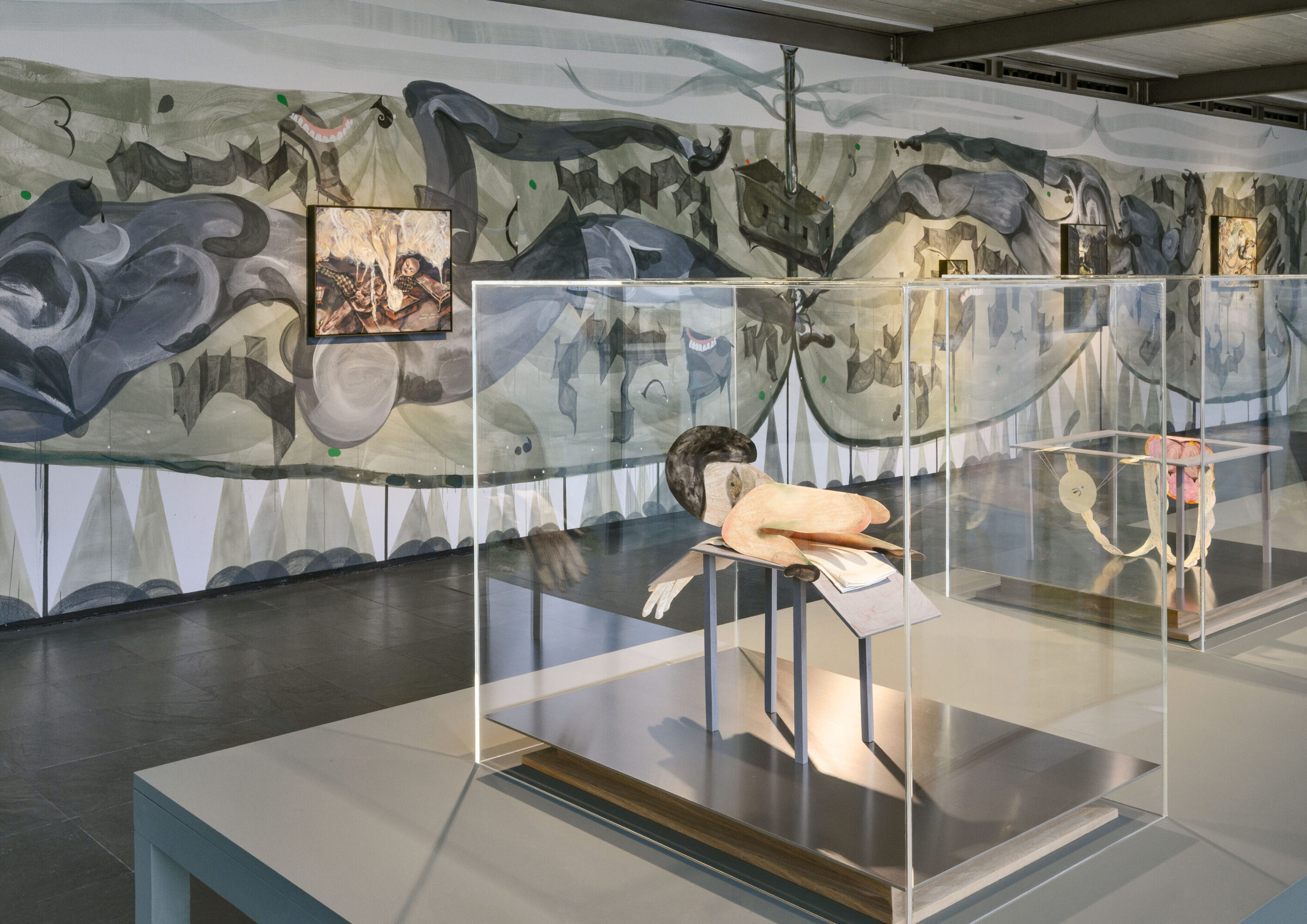
Installation view Guglielmo Castelli: Sweet Baby Motel, Kunsthalle Wien 2026 Courtesy the artist; Mendes Wood DM, São Paulo/Brussels/New York/Paris and Sylvia Kouvali, London/Piraeus, photo: Iris Ranzinger