The Poetics of the Female Figure — Elisabeth von Samsonow on Her Upcoming Solo Exhibition at the Heidi Horten Collection
This September marks the opening of a major solo exhibition showcasing an artistic and philosophical perspective that transcends narrow disciplinary boundaries. Sabine B. Vogel spoke with the artist in advance.
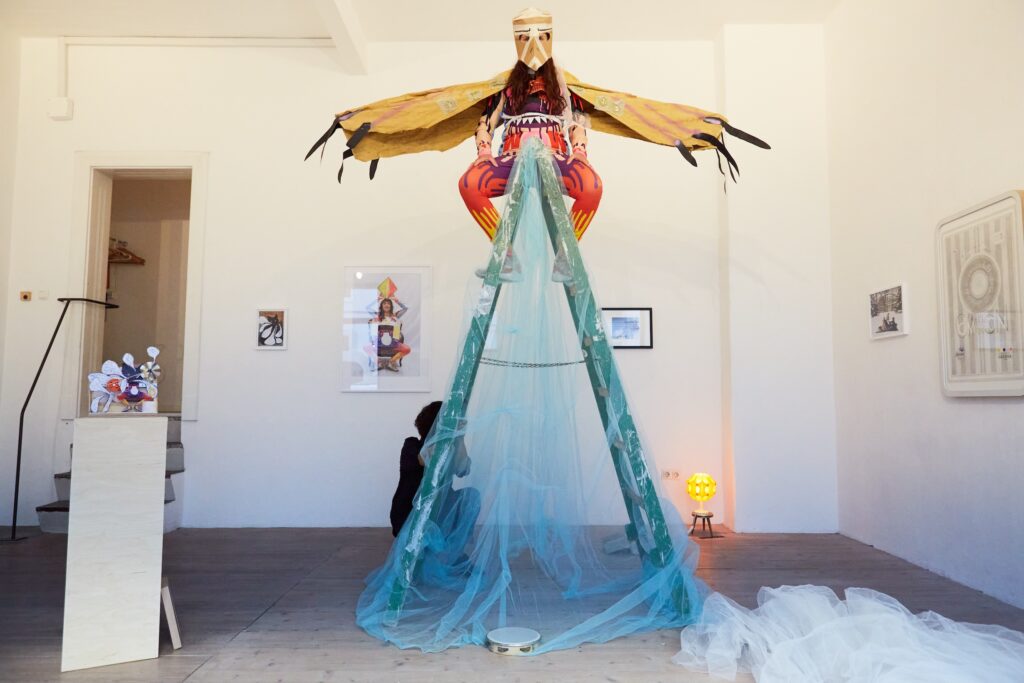
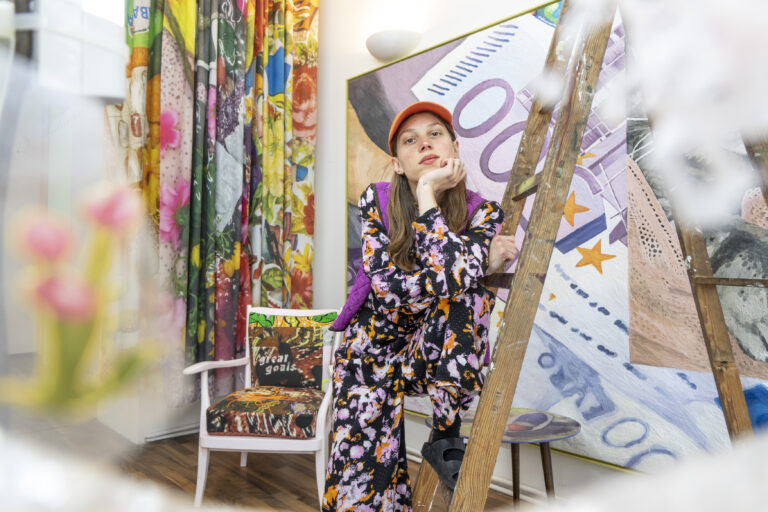
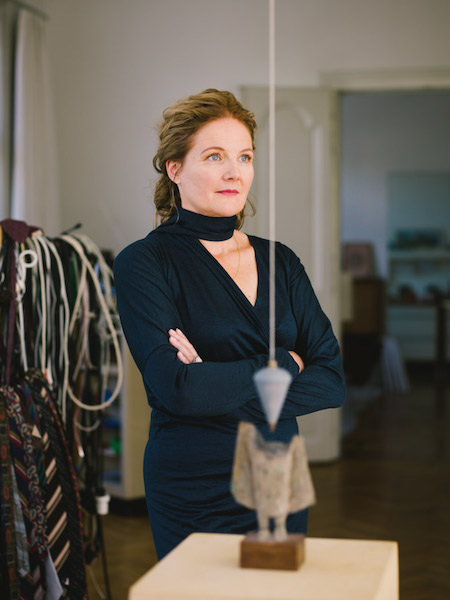
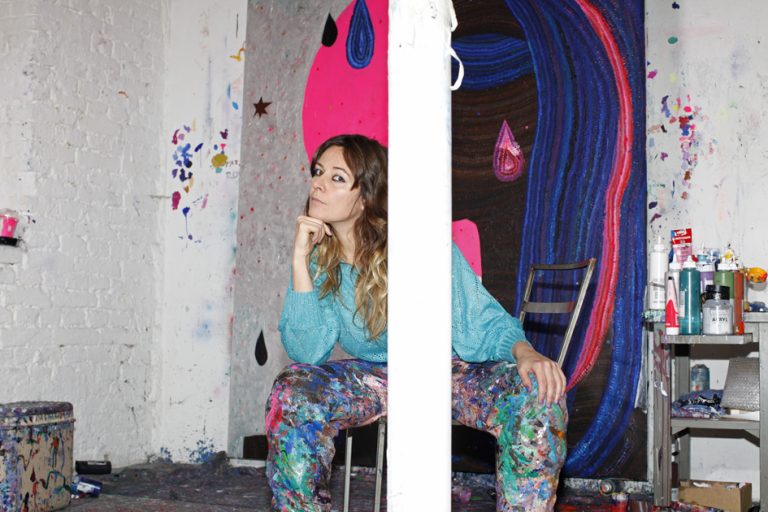
Portrait Elisabeth von Samsonow © Elisabeth von Samsonow
Until now, exhibitions at the Heidi Horten Collection have been closely tied to the collection of its namesake. Opened in 2022 as a private museum, it has primarily hosted thematic group exhibitions. The program of the new director, Verena Kaspar-Eisert, who has been in office since November 2025, however, now begins with a solo exhibition.
For six months, Elisabeth von Samsonow will occupy the top two floors—it will be her first ever retrospective exhibition, reveals the artist, who was born in Bavaria in 1956. In Vienna, Samsonow was known for many years primarily as a theorist, ever since she took over the Chair of Sacred Art at the Academy on Schillerplatz in 1996, which was renamed the Chair of Philosophical and Historical Anthropology of Art in 2000.
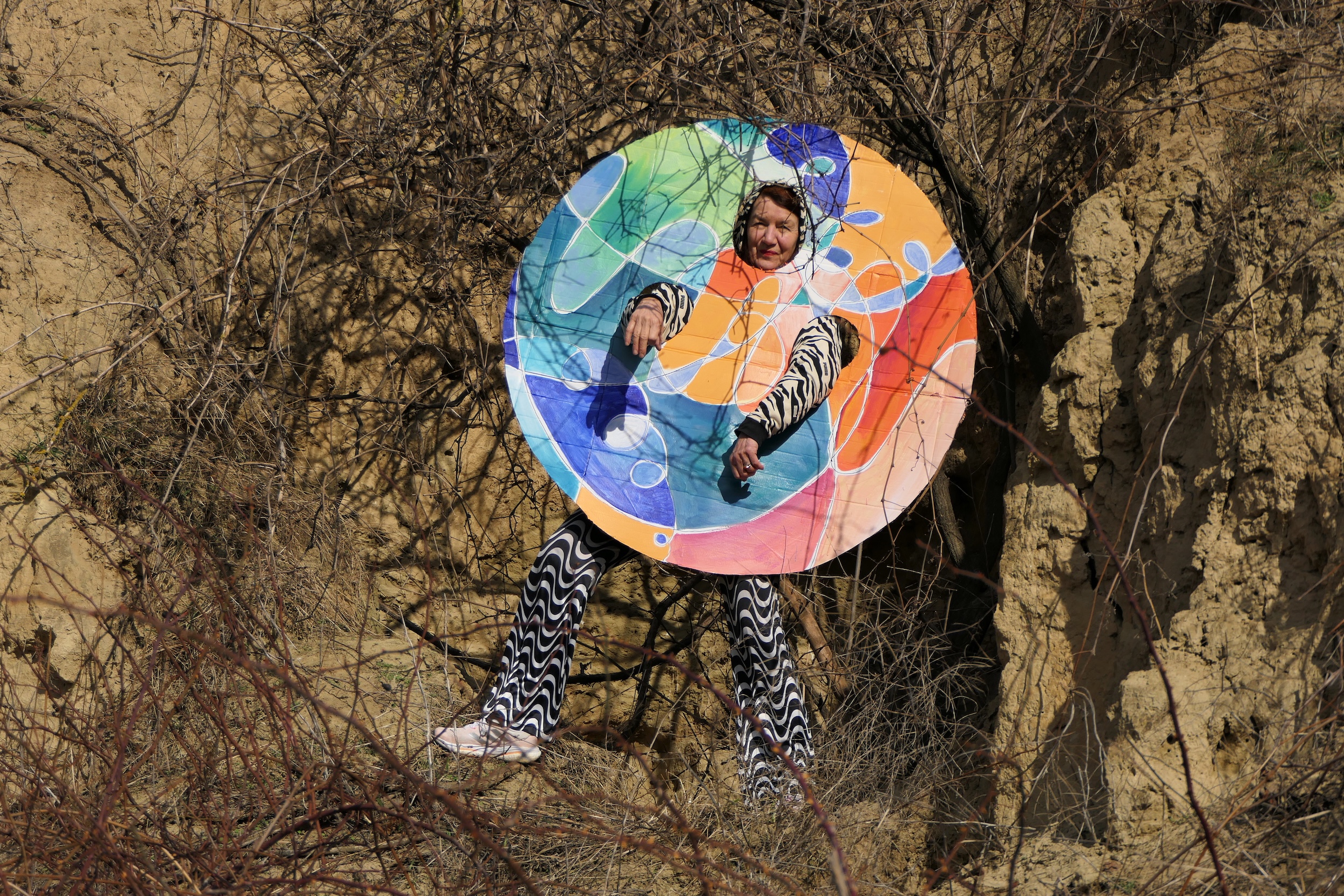
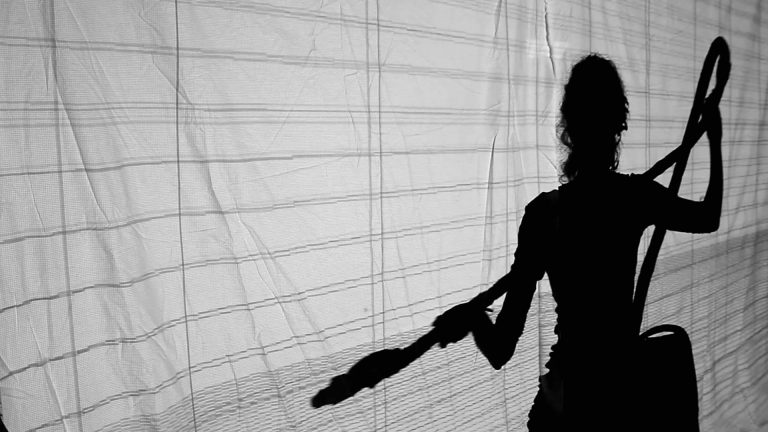
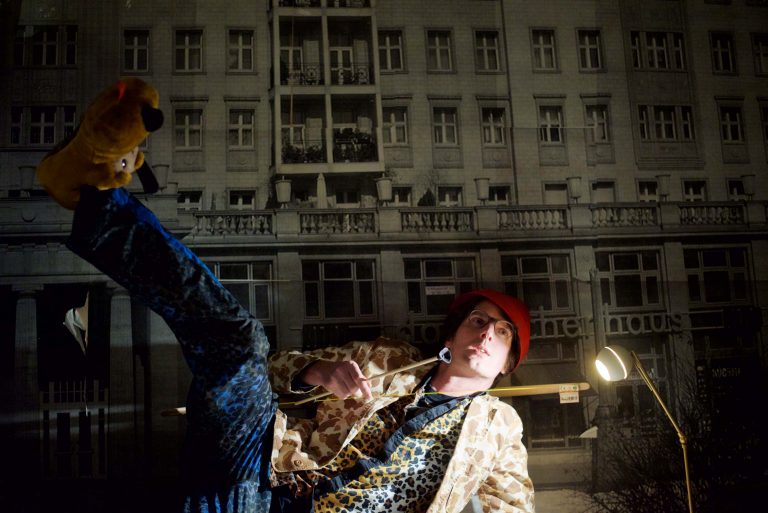
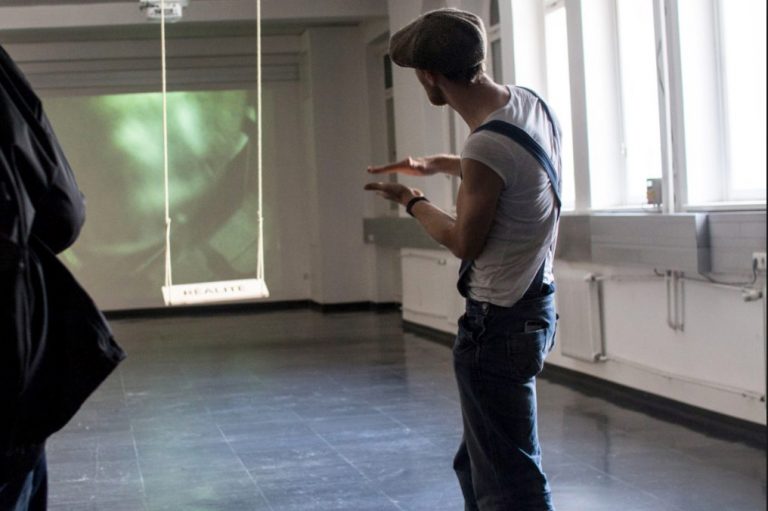
Elisabeth von Samsonow, Performance "Peripatos im Löss", 2025. Photo: Maresa Jung
Sabine B. Vogel (SBV): How did you, as an artist, come to hold a professorship in philosophy?
Elisabeth von Samsonow (EvS): I studied philosophy, earned my doctorate, and published works. At that time, there wasn’t a single female department chair at the Academy. They were looking for a theorist. Peter Sloterdijk, as chair of the appointment committee, strongly advised me not to mention under any circumstances that I was an artist. For several years afterward, I continued to exhibit in Germany, but almost never in Vienna. Later on, I was able to combine my art well with my philosophy teaching and research.
SBV: In your philosophical reflections and also in your art, you’ve dealt extensively with nature, the earth, gender relations, and anthropology—will your retrospective be organized thematically along these lines?
EvS: There will be sections with common threads centered on these themes, but the connection between art and philosophy will also be emphasized. I was a painter in the 1970s; this will be on view on the middle floor in “The Beginning of Practice.” This is followed by the section featuring the linden wood sculptures.
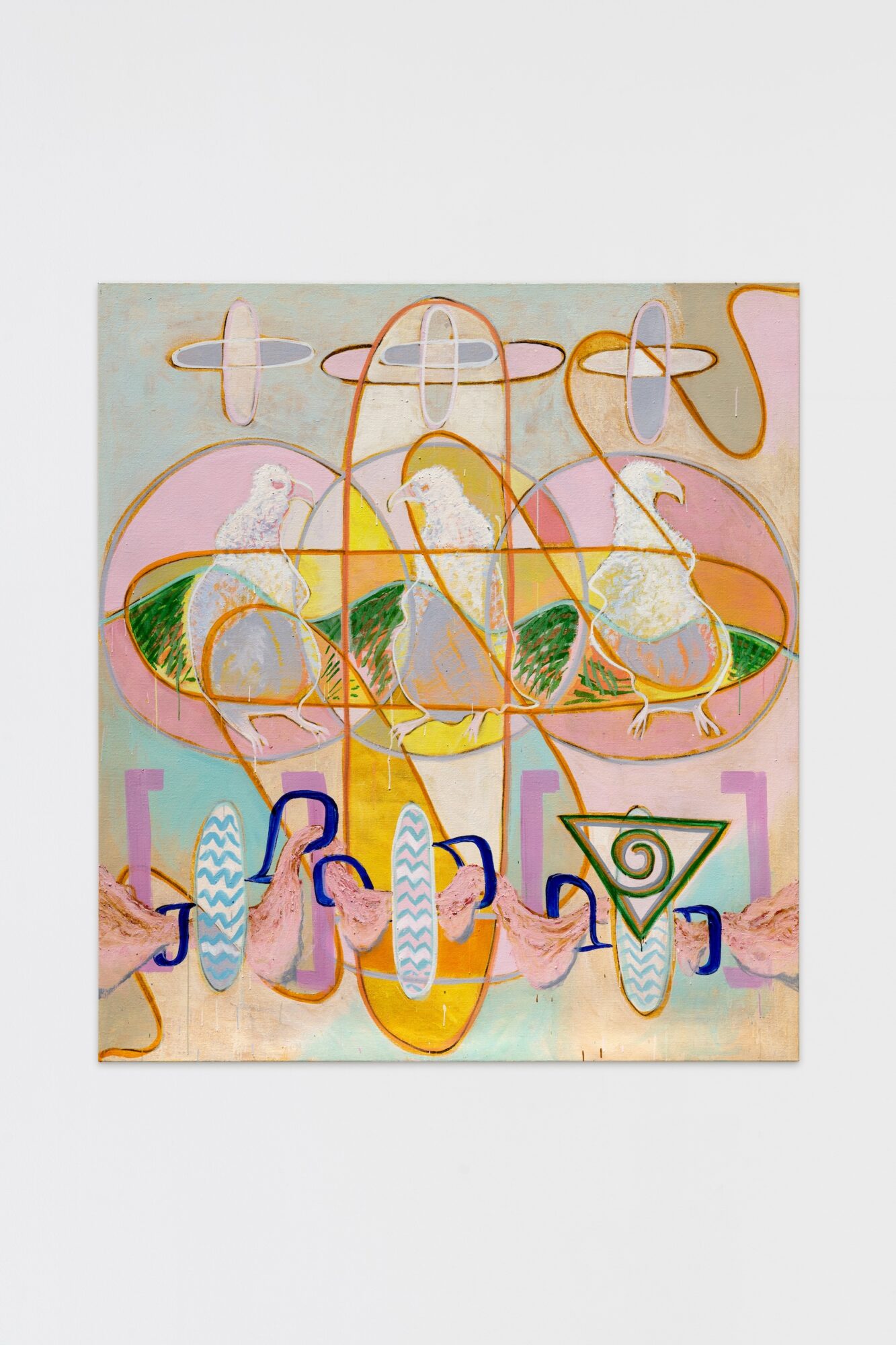
Elisabeth von Samsonow, GEO PSYCHE—The three eagle chicks from the 2026 brood are welcomed and blessed by the underground waters, tempera on jute, 150x200, 2026. Photo by Simon Veres
SBV: Does this also mark the beginning of your central theme of goddesses, for which you’ve become known in recent years? How did you come to focus on this?
EvS: This theme occupies the entire upper floor. In 2018, as a group of archaeologists, sociologists, and philosophers, we submitted the research project “Contemporary Prehistories. The Dissident Goddesses Network,” which ran until 2022. It explored the hypothetical idea—or question—of whether historical female figures such as the Venus of Willendorf hold significance for the role of women. In 2020, we anchored this research in the Pulka Valley in Lower Austria as the “Land of the Goddesses,” creating an art and research site.
SBV: How did that manifest itself in your art?
EvS: I soon began painting maps of the land—at first, watercolor bird’s-eye views that became increasingly composed and less and less realistic. That’s where it gets interesting for me as an artist. How can one bring together the layers of meaning in the landscape, its functions, and the animals that live there? How can one depict an ontologically effective order on a diagrammatic level? That’s how the land gradually became an epiphany for me.
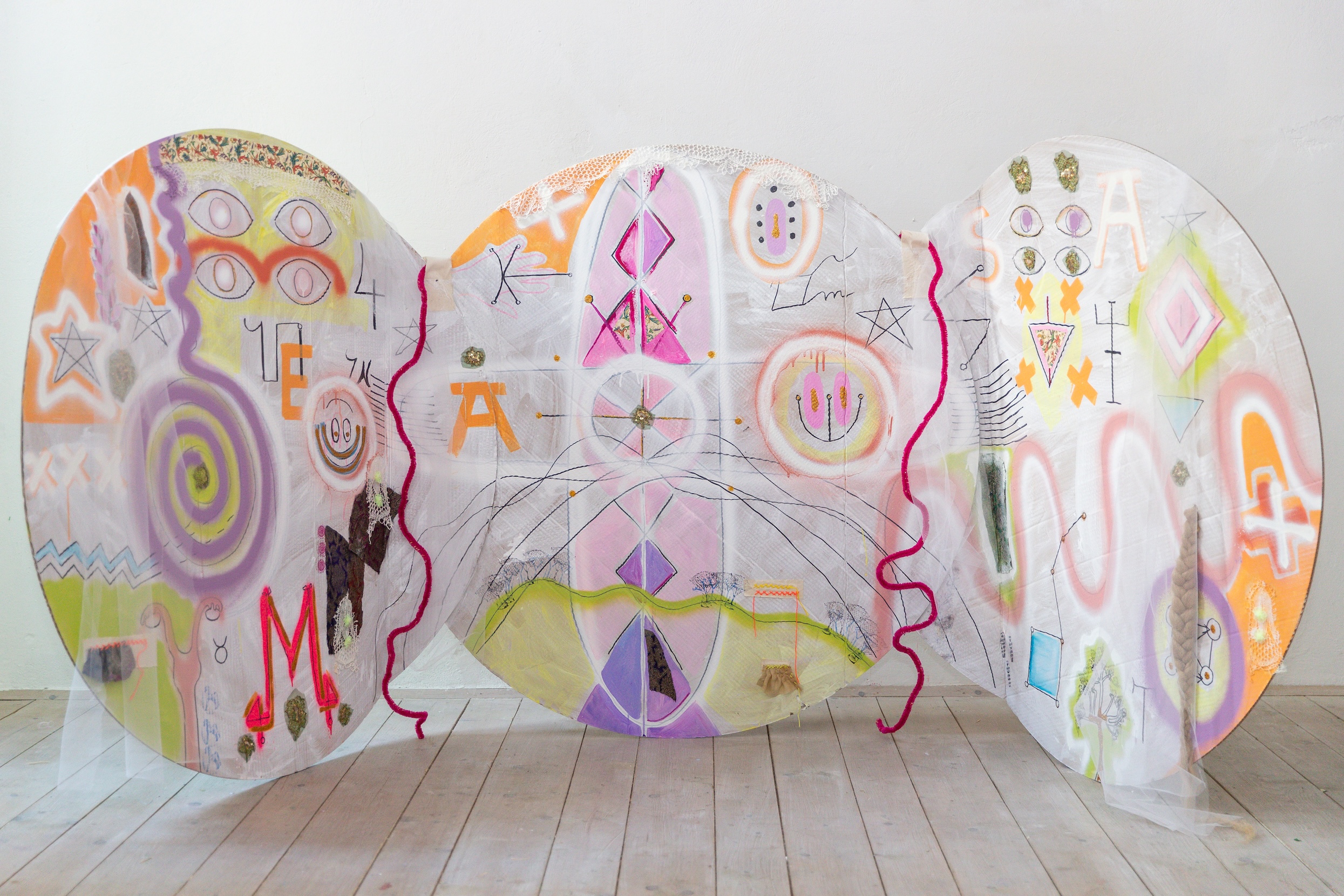
Elisabeth von Samsonow, Medea's Magic Deck. Mixed Media on Cardboard, 120x300, 2024. Photo: Max Brucker
SBV: Is that how the goddesses come into the picture?
EvS: As part of our research project, we investigated how female figures from prehistory continue to influence us as visual sources and conceptual models, inspiring us to this day and enabling alternative perspectives on history. Within this framework, I organized a performative goddesses’ festival on our land in the Pulkau Valley.
SBV: What did you hope to convey with that?
EvS: We wanted to show how multifaceted the habitats are, what communities have formed, and how regenerative the land is. The land became a kind of laboratory—for the exemplary, but also for the paradigmatic—to experience what happens where and what reactions look like. The goddesses are not religious, not transcendent, nor are they a revived faith or anything of the sort; rather, they are a symbol of our connection to the earth.
SBV: A reservoir of images and stories?
EvS: Yes, as a vehicle for cultural ideas and images that continue to have an impact today. As a distinct visual language that encompasses notions of the body, nature, community, and spirituality. That was also the theme of the exhibition “The Language of the Goddesses,” which I curated together with archaeologist Katharina Rebay-Salisbury at MAMUZ Schloss Asparn/Zaya, starting in April 2025 and then extended—due to the enormous interest—until probably the end of November 2026.
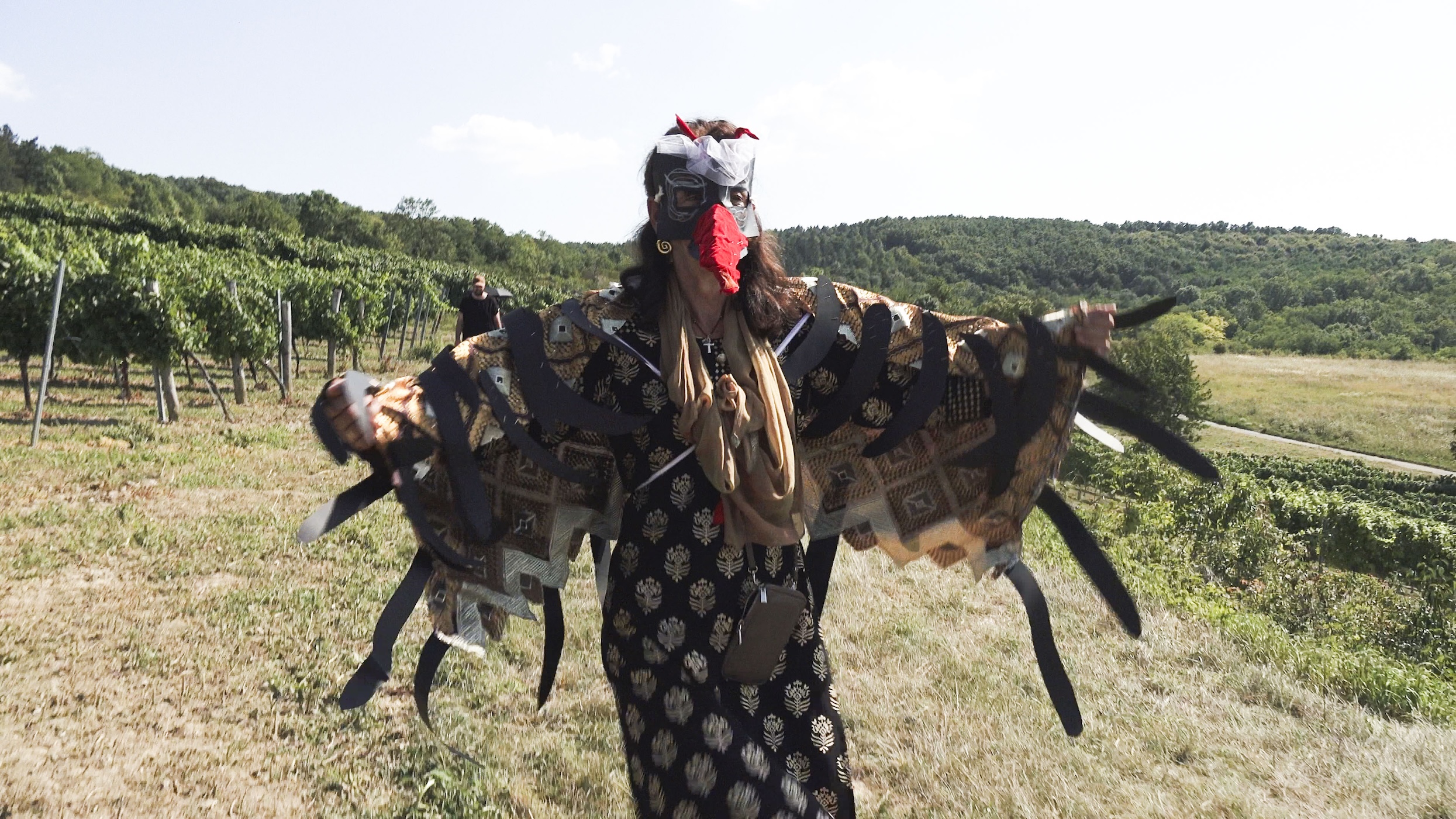
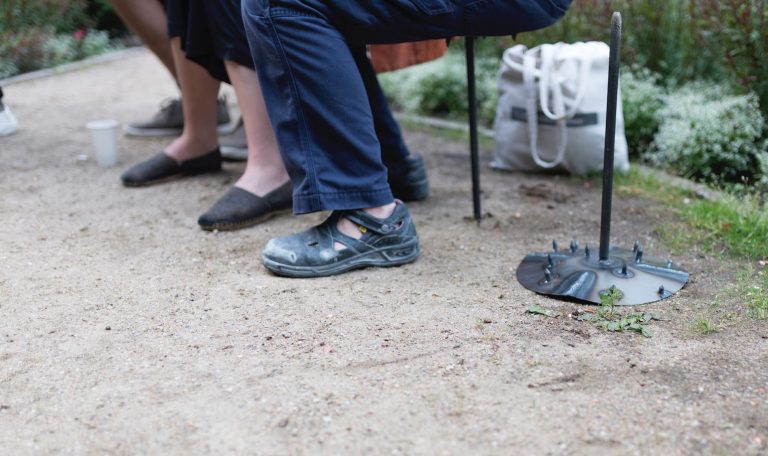
Goddesses' festival © Elisabeth von Samsonow
SBV: Does this theme also play a role in your art?
EvS: Yes, I’ve been working intensively with the Cycladic idols…
SBV: …the stylized figures made of white marble, dating from around 3200 BCE?
EvS: …yes, for me it’s about the poetics of the female figure—in clear contrast to religious interpretations such as fertility or other concepts. Rather, as guardians of the land—that’s a central theme in my exhibition at the Heidi Horten Collection.
SBV: Thank you for the interview!
Exhibition
Elisabeth von Samsonow
Heidi Horten Collection
19 September 2026 – 28 February 2027
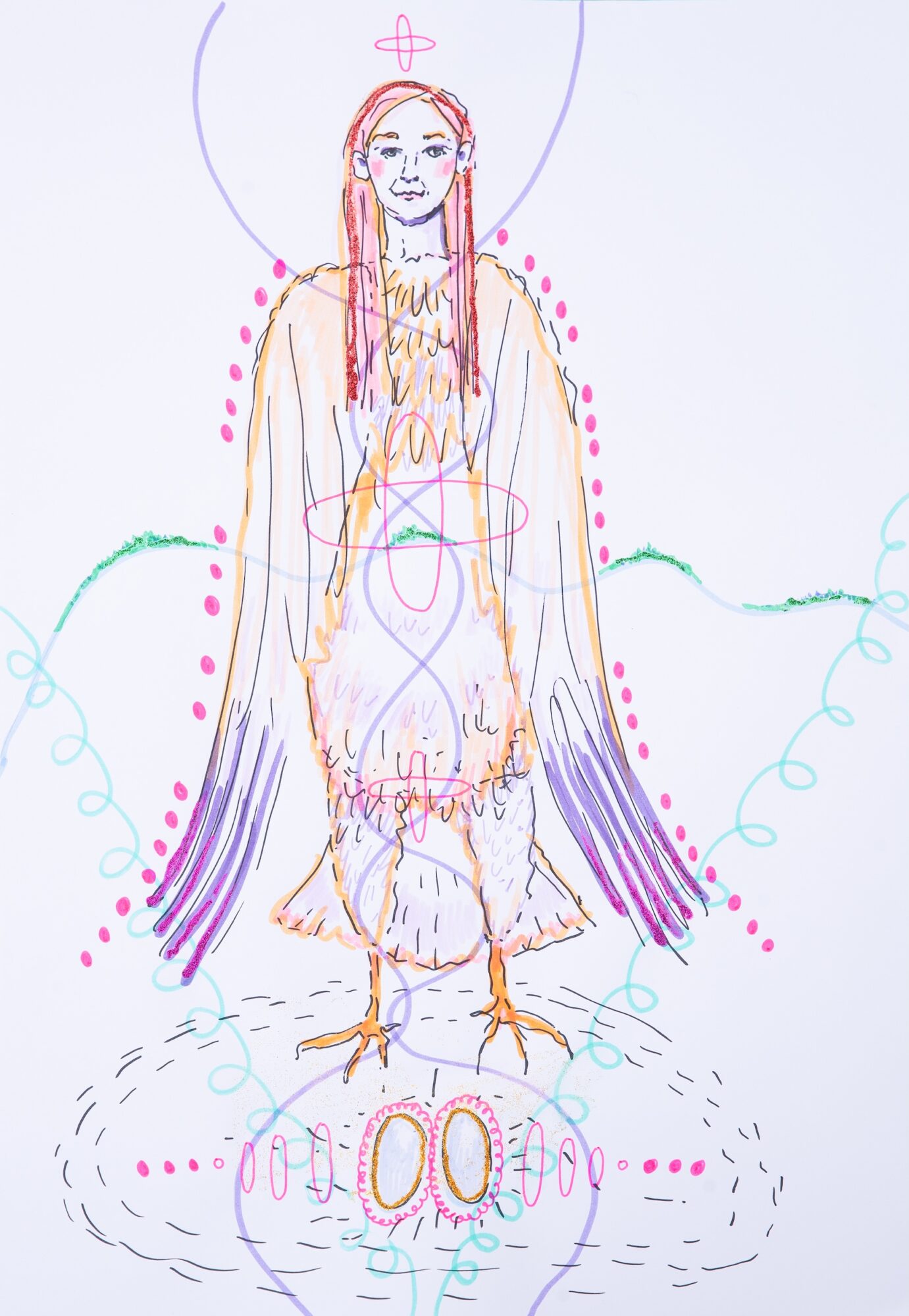
Elisabeth von Samsonow, Me as an Eagle. Felt-tip pen and glitter on paper, 38x50, 2024. Photo: Max Brucker